Dismantling of a wharf crane by Yew Choon and Hiap Tong
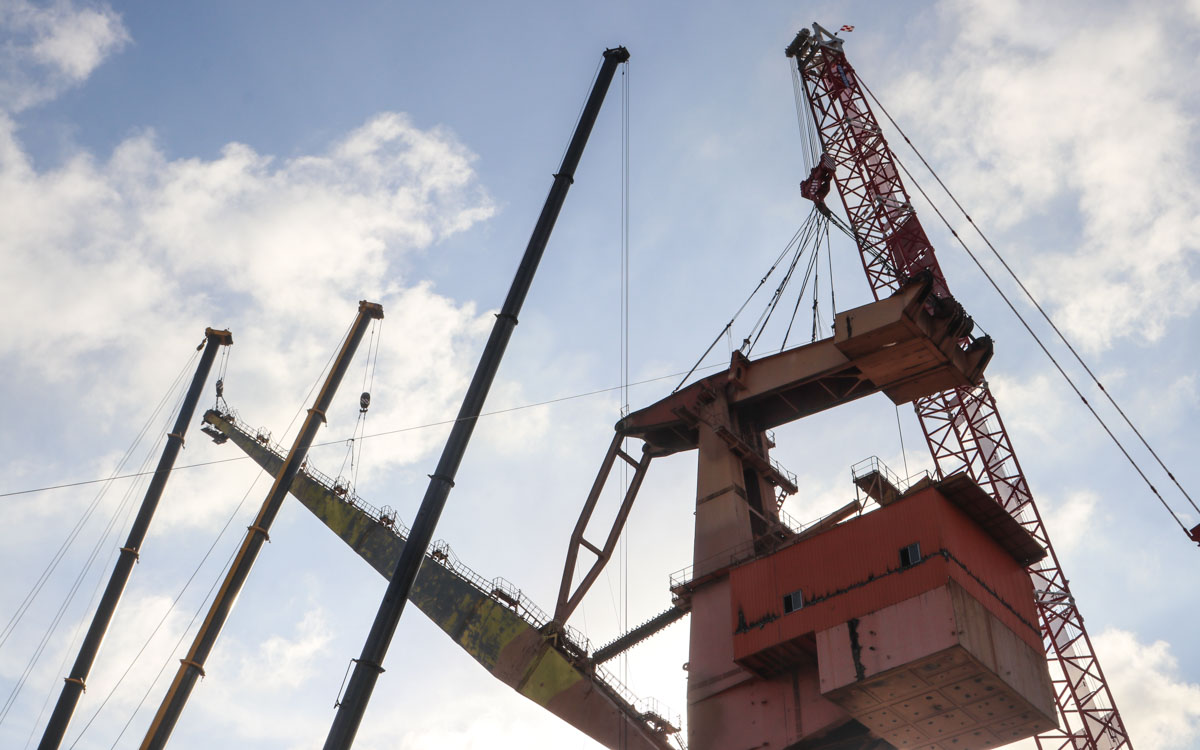
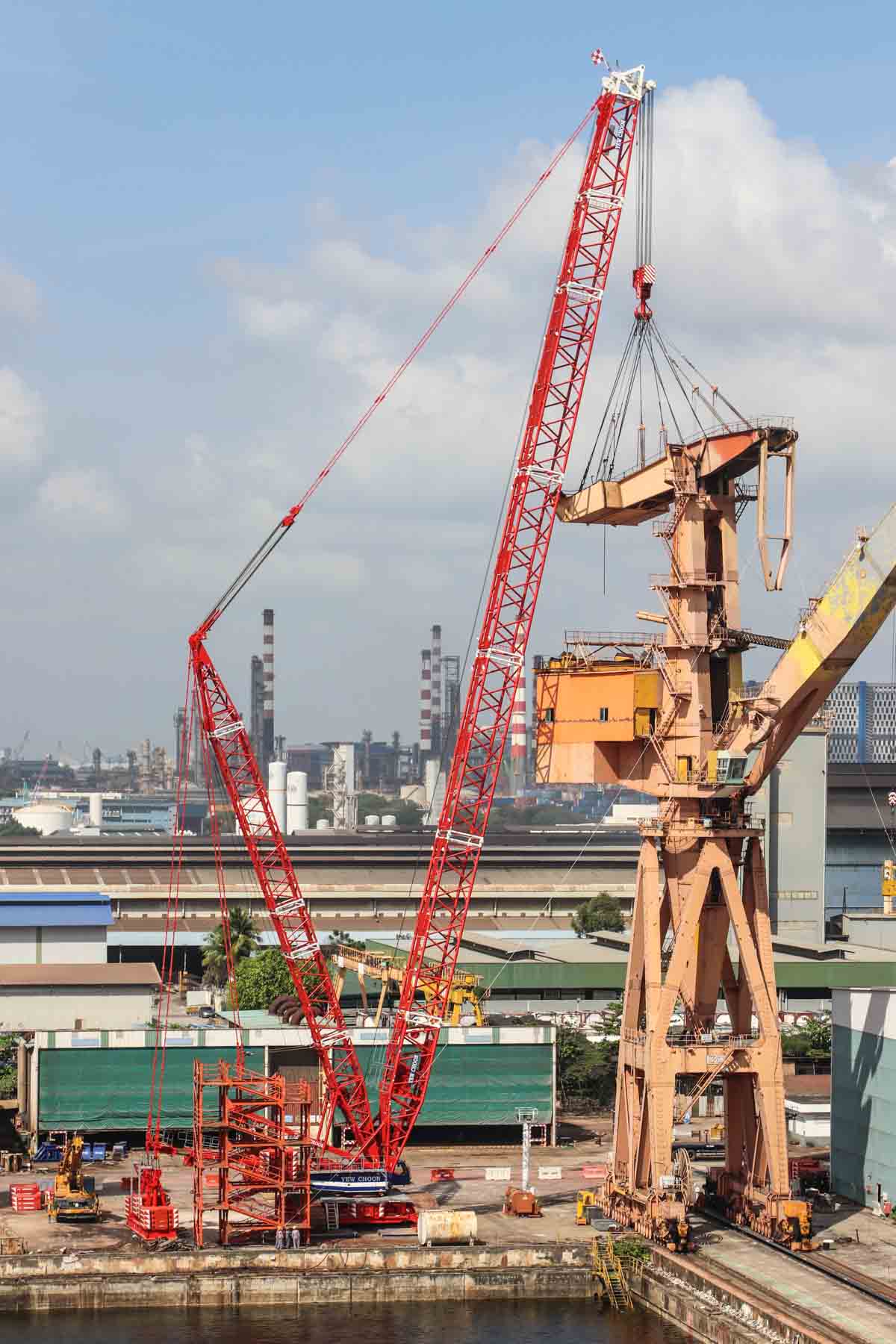
For the dismantling of a heavy yard crane in Singapore (SG), considerable heavy equipment was brought into action. Three heavy cranes have already been attached here to various parts of the wharf crane, and a fourth crane serves as an auxiliary crane. This promises to become something special.
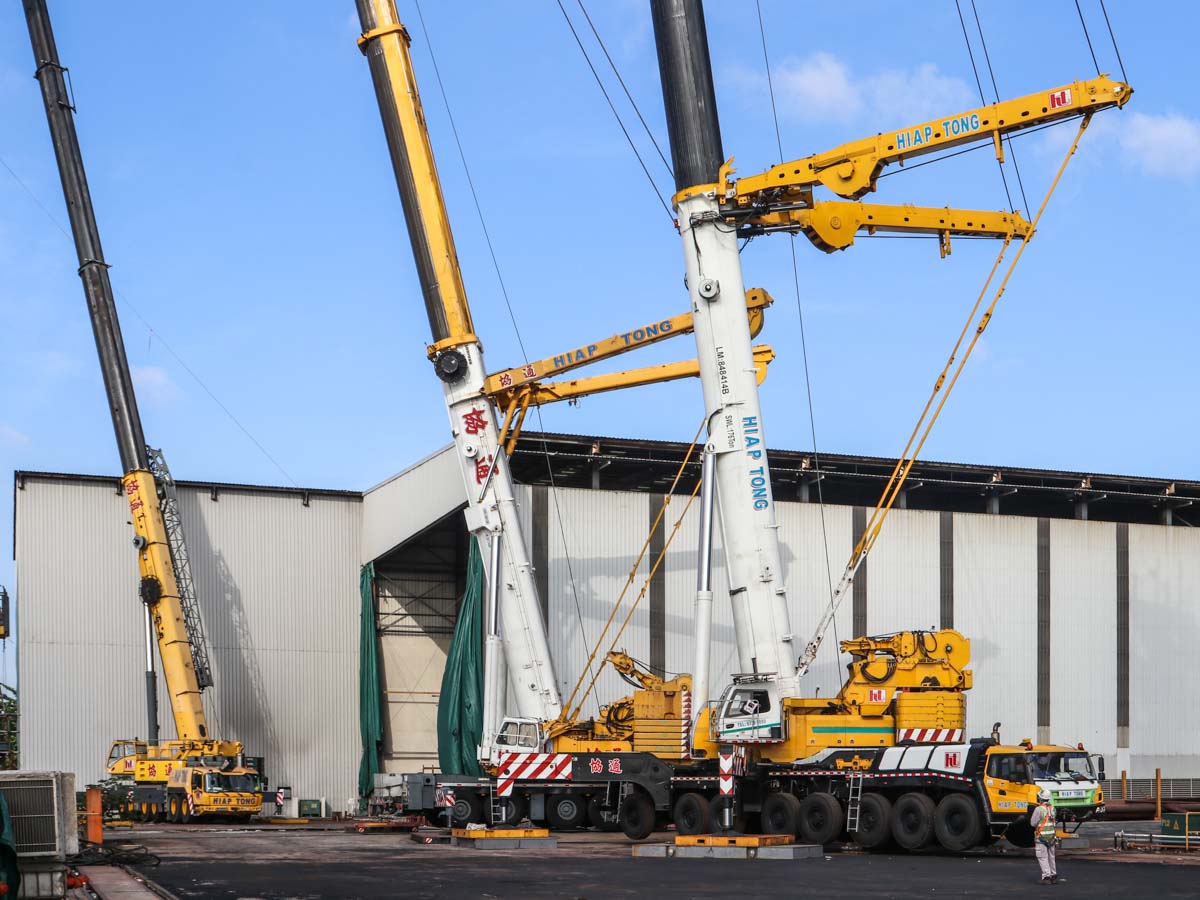
The telescopic cranes are all three from Hiap Tong of Singapore. They are the Grove GMK6300L, the Liebherr LTM 1500-8.1 and the Sany SAC6000.
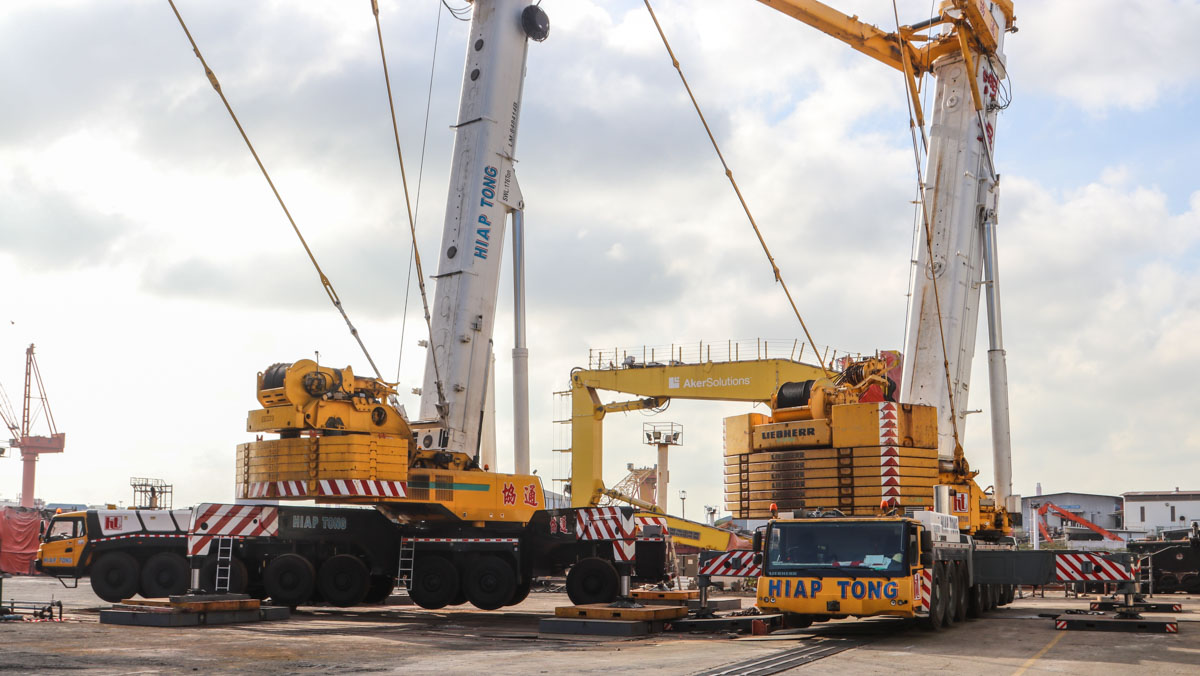
The two largest cranes, the 500-tonne and 600-tonne units, are attached to the boom of the wharf crane. The 300-tonne Grove serves as the auxiliary crane.
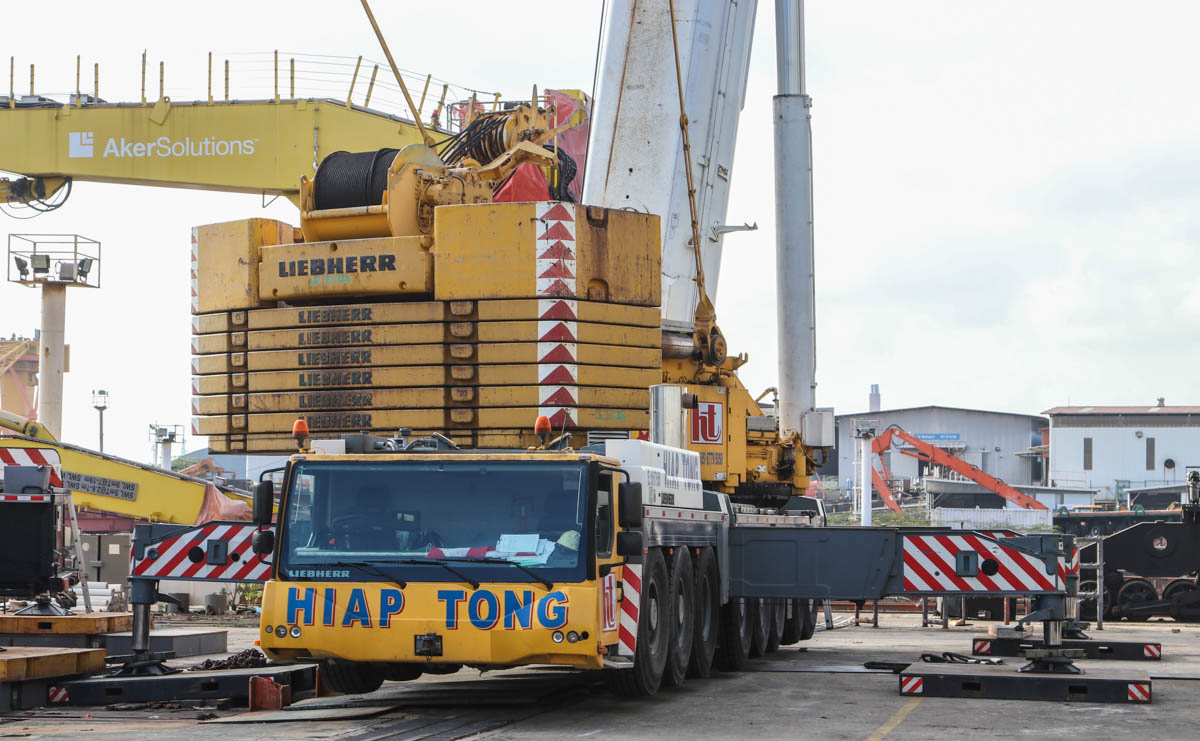
The Liebherr LTM 1500-8.1 is erected with 135 tonnes of ballast.

The Sany SAC6000 is erected with 105 tonnes of ballast.
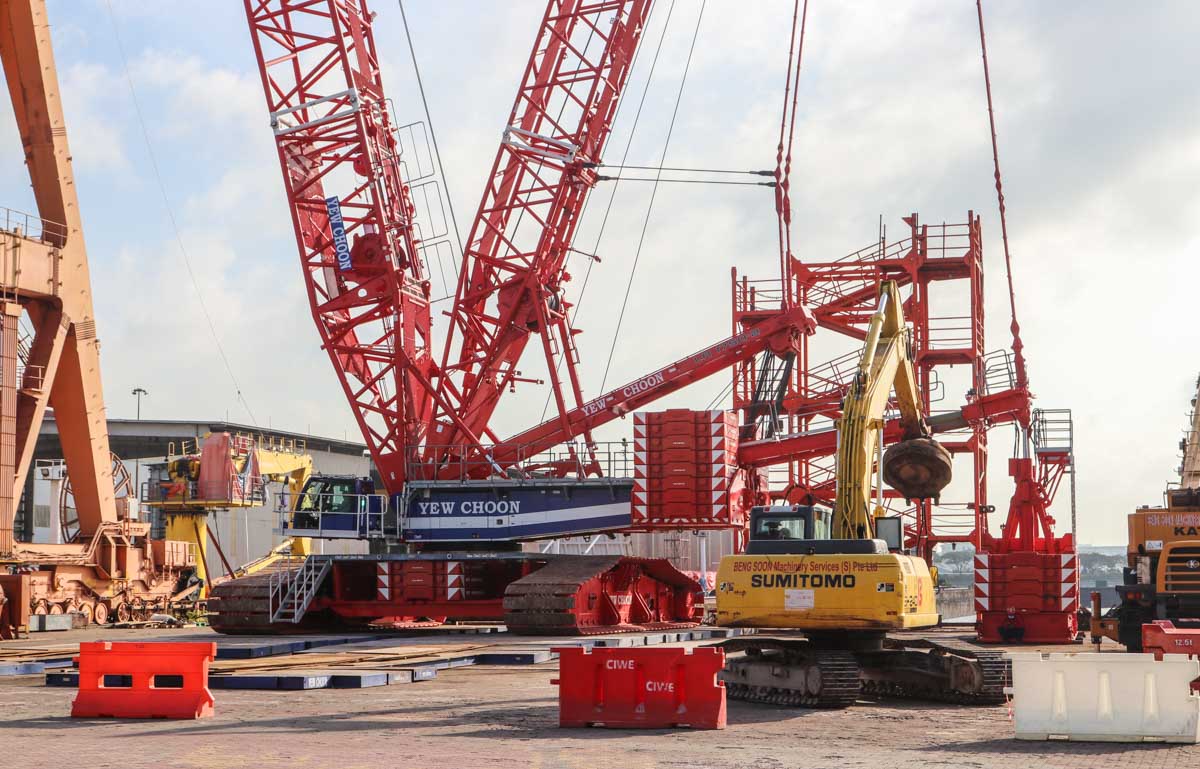
The fourth crane is the impressive Liebherr LR 1750/2 of Yew Choon, also from Singapore.
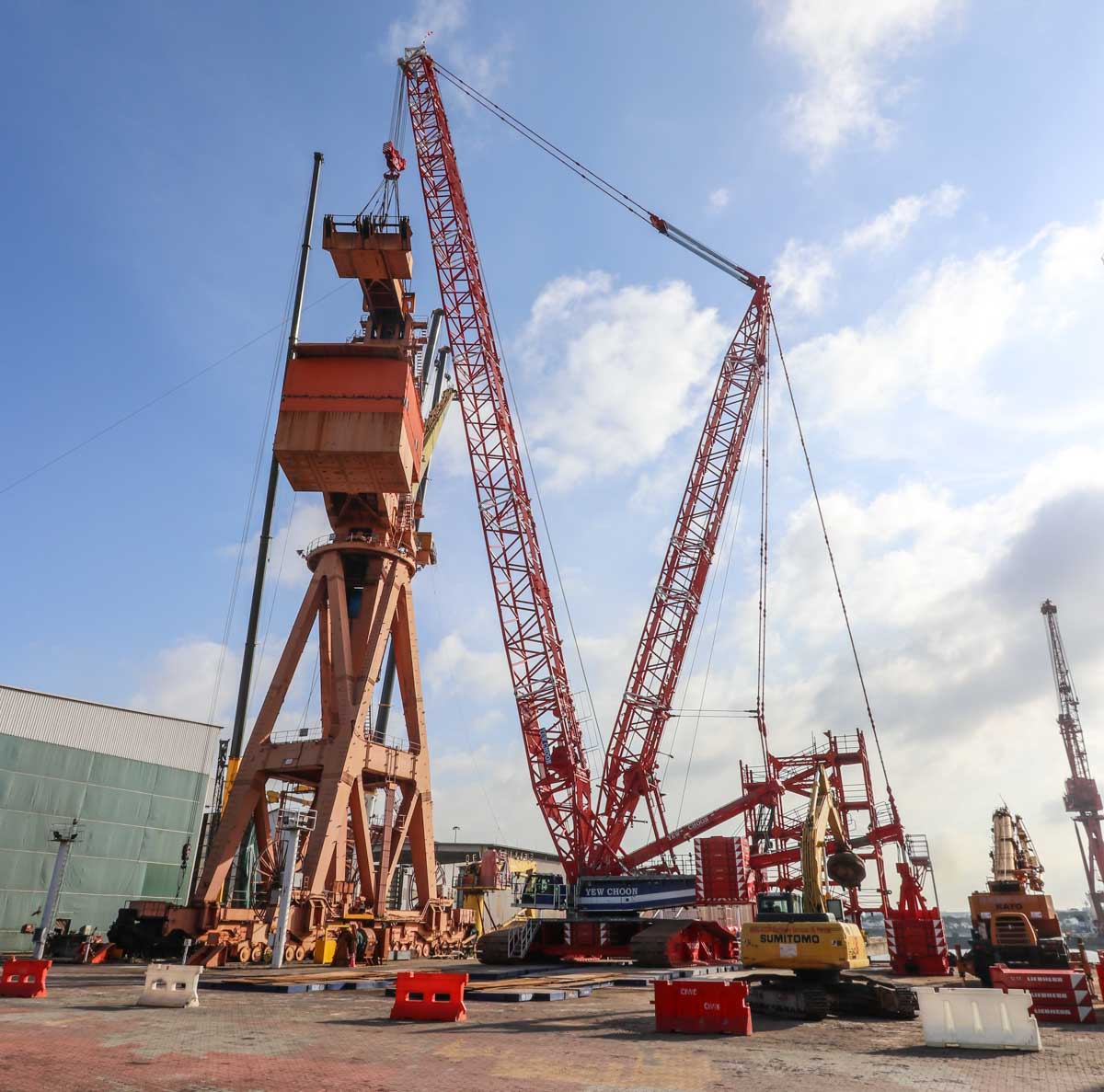
The Liebherr LR 1750/2 is erected in SXSD4B configuration, the main boom is 84 metres long and the superlift boom is 42 metres long. The crawler crane is attached to the ballast; that ballast block will be removed later today.
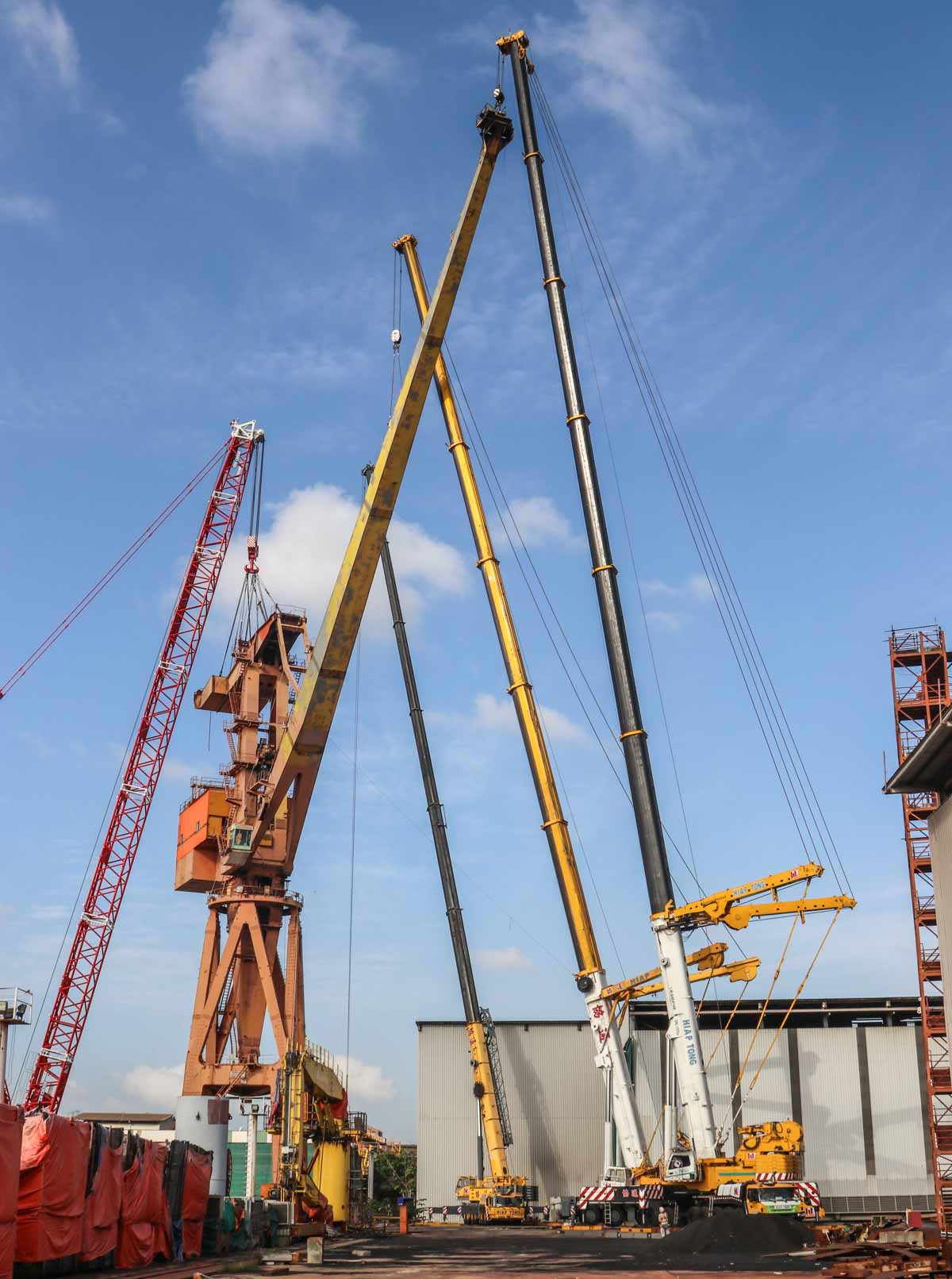
It is an old wharf crane from the year 1974. As was fairly common at the time, the ballast was connected to the main boom via a balance-beam arrangement. That connection will have to be removed in order to take off the ballast. The telescopic cranes will keep the main boom in position.
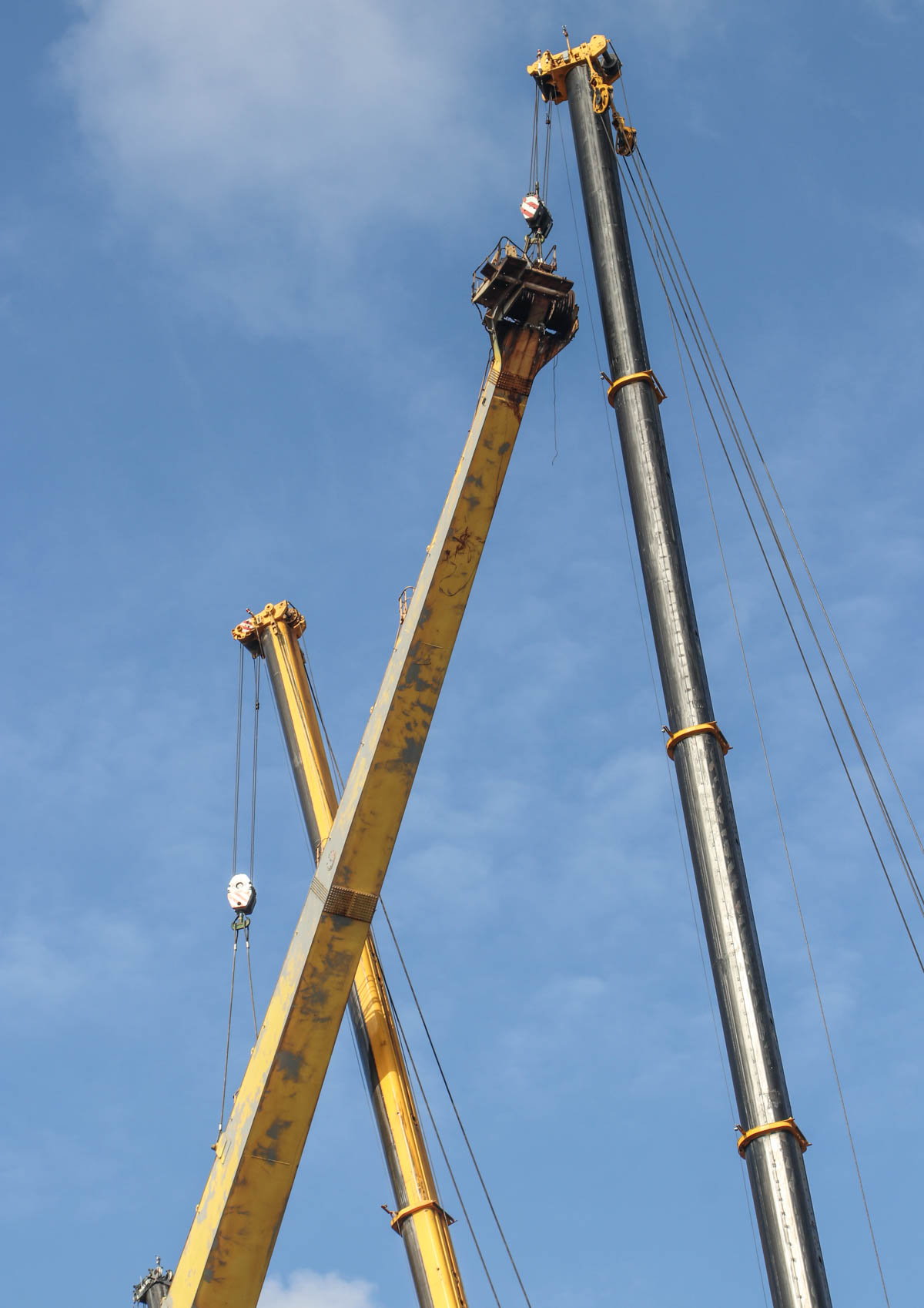
The LTM 1500-8.1 has telescoped its main boom to the maximum length of 84 metres, and the SAC6000 has telescoped its main boom to the maximum length of 90 metres.
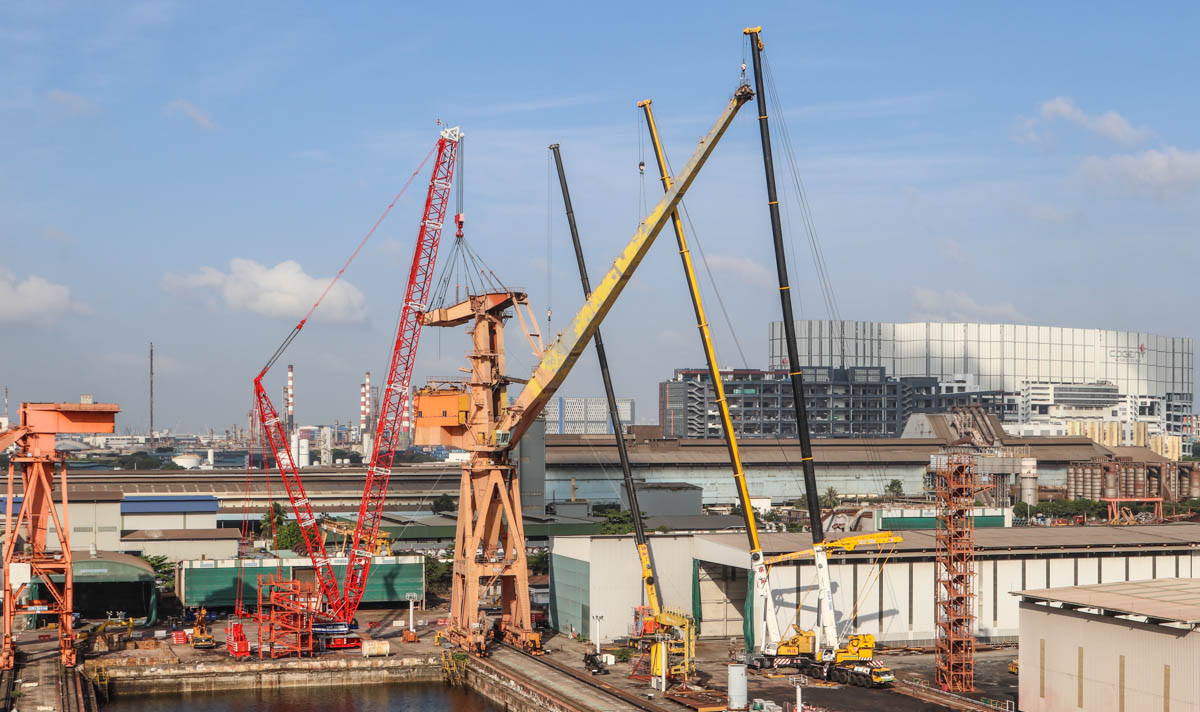
Here is an overview of the situation. All cranes are under tension; the LR 1750/2 is lifting 140 tonnes, the LTM 1500-8.1 is lifting 12 tonnes and the SAC6000 is lifting 27 tonnes here. Employees of the dismantling company have meanwhile started, from a man basket suspended in the GMK6300L, to cut through the connection between the ballast and the main boom.
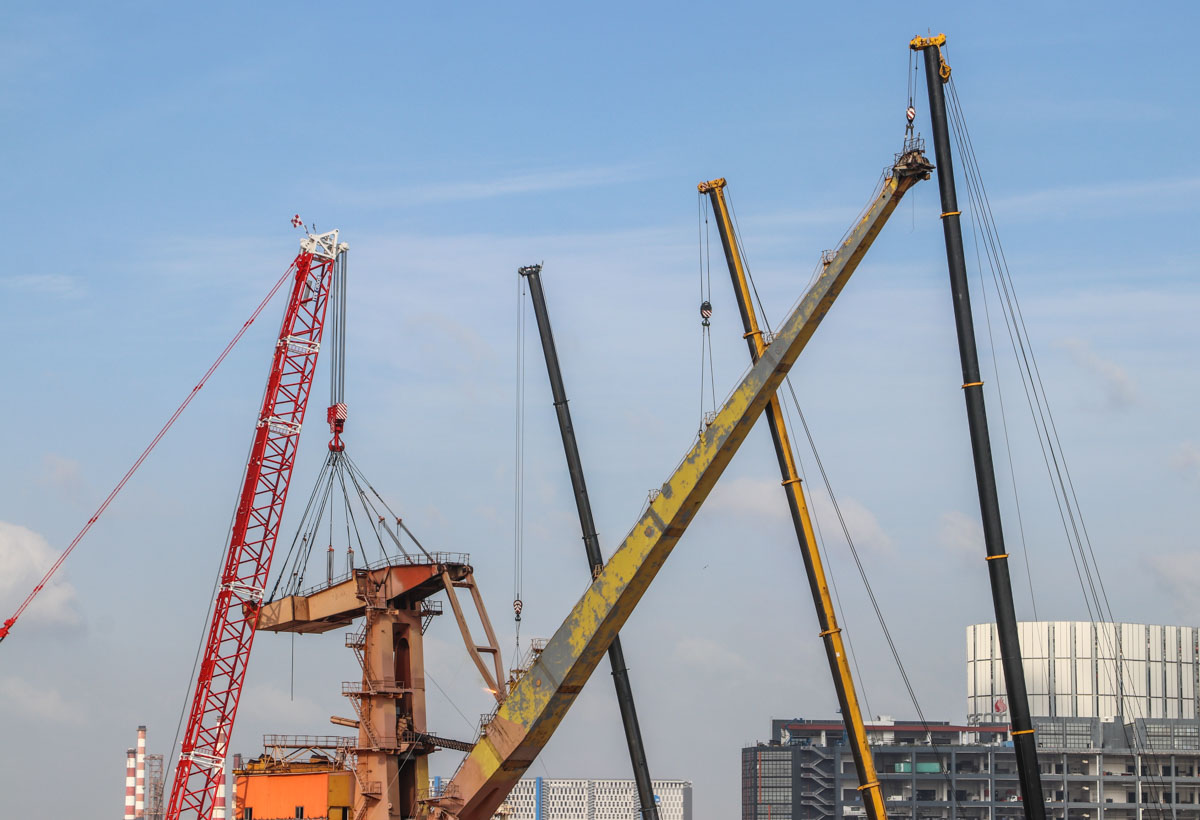
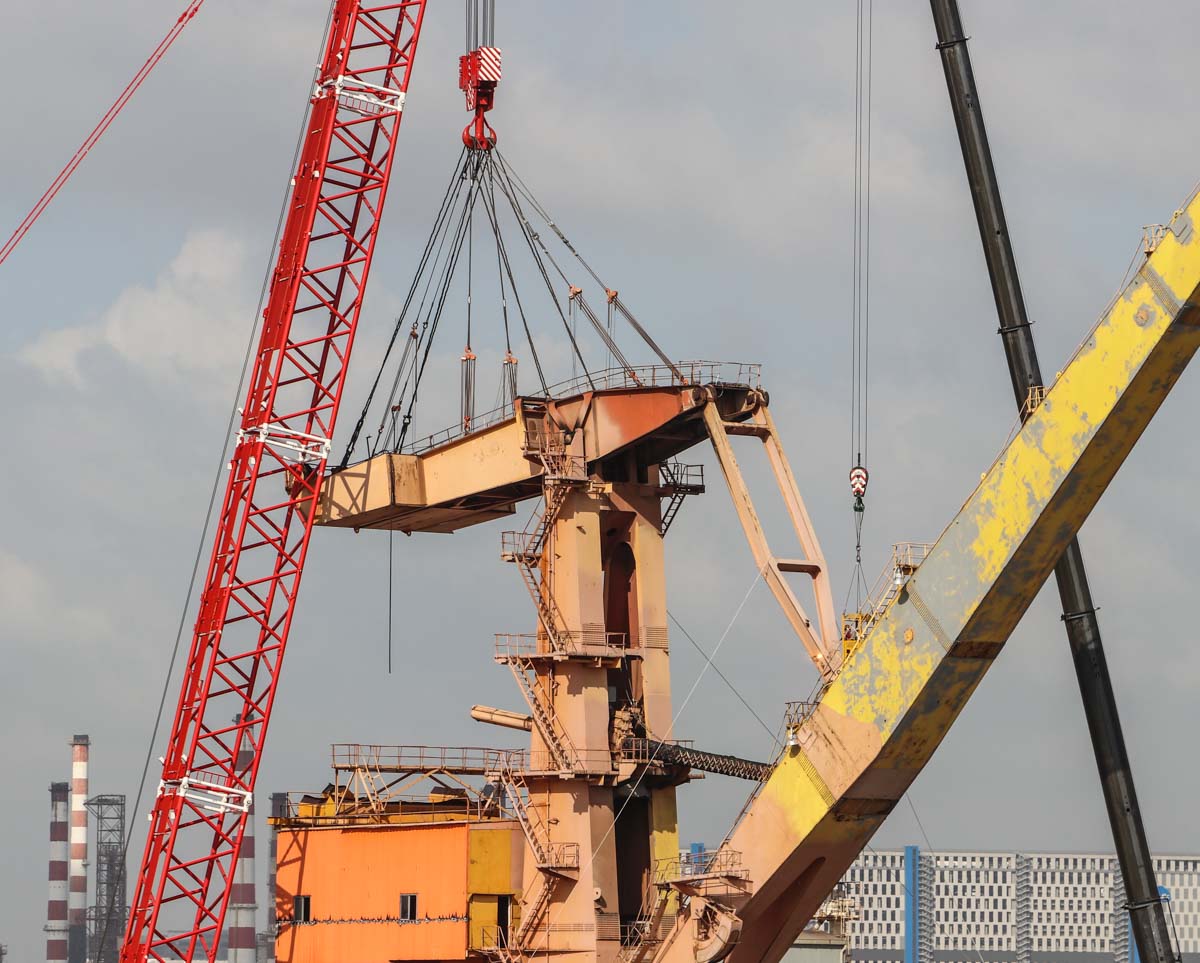
The ballast could therefore move and is hanging slightly out of level; with the aid of multiple chain hoists, the ballast was rigged. During the cutting, the crawler crane keeps lifting a little more each time until the ballast comes lightly into motion.
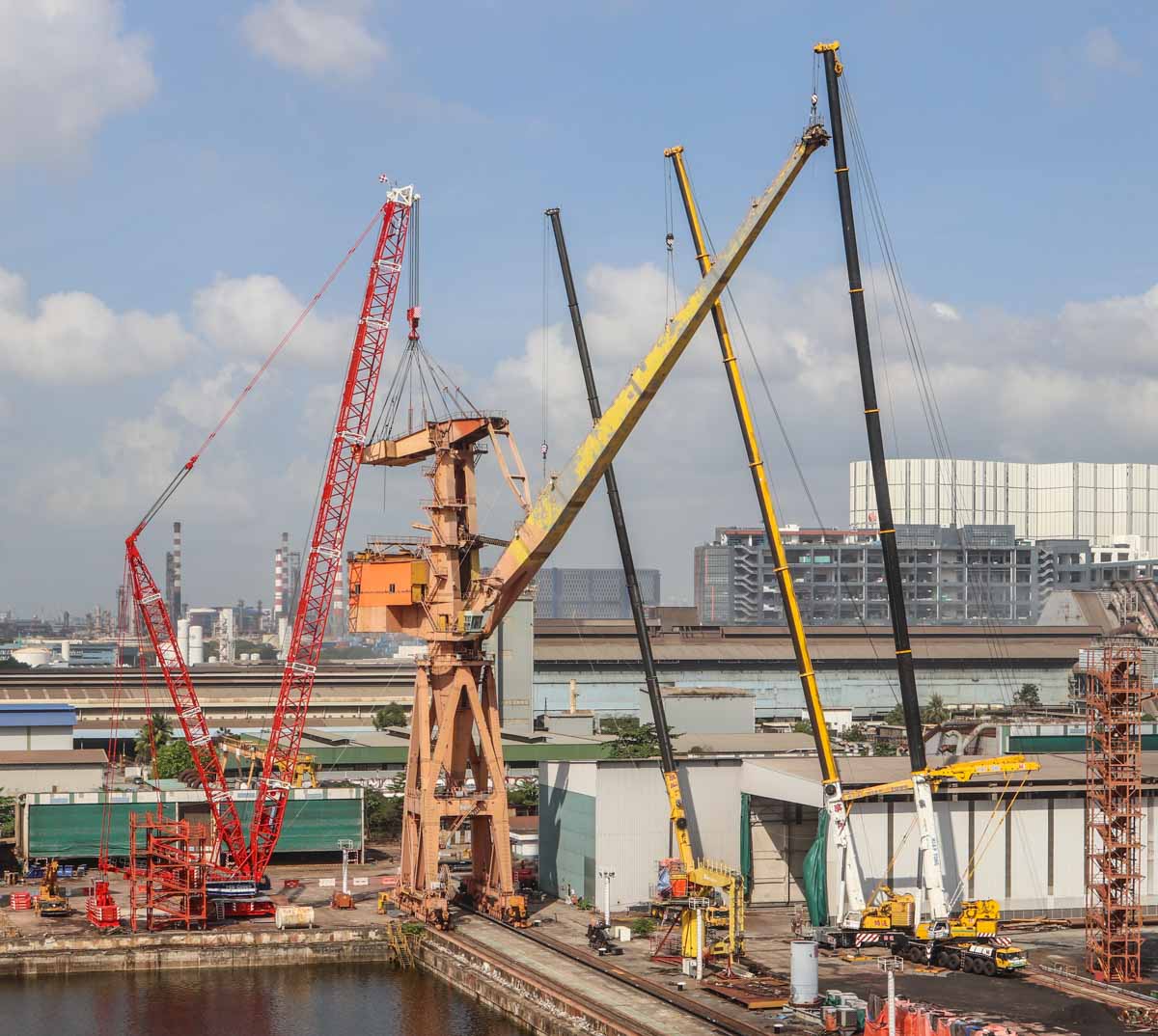
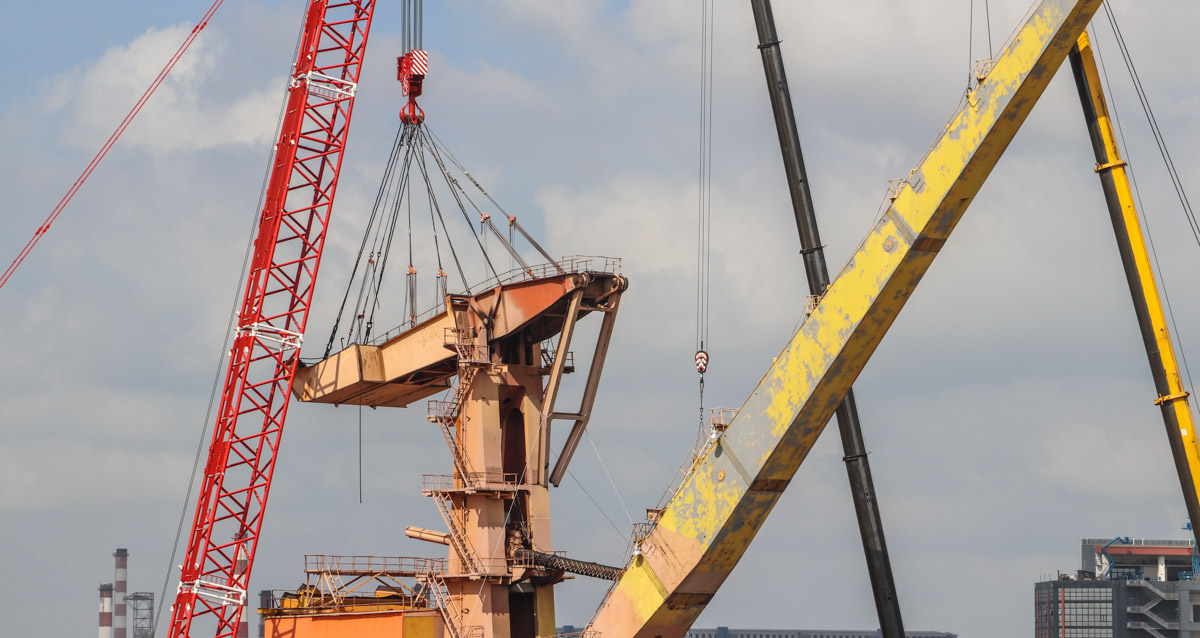
After approximately 1.5 hours of cutting, the connection has been severed. The telescopic cranes keep the main boom in position; the ballast is now suspended in the crawler crane.
The ballast therefore ultimately weighed 168 tonnes; together with the rigging of 4 tonnes and the hook of 16 tonnes, the crane is now lifting a total of 188 tonnes!
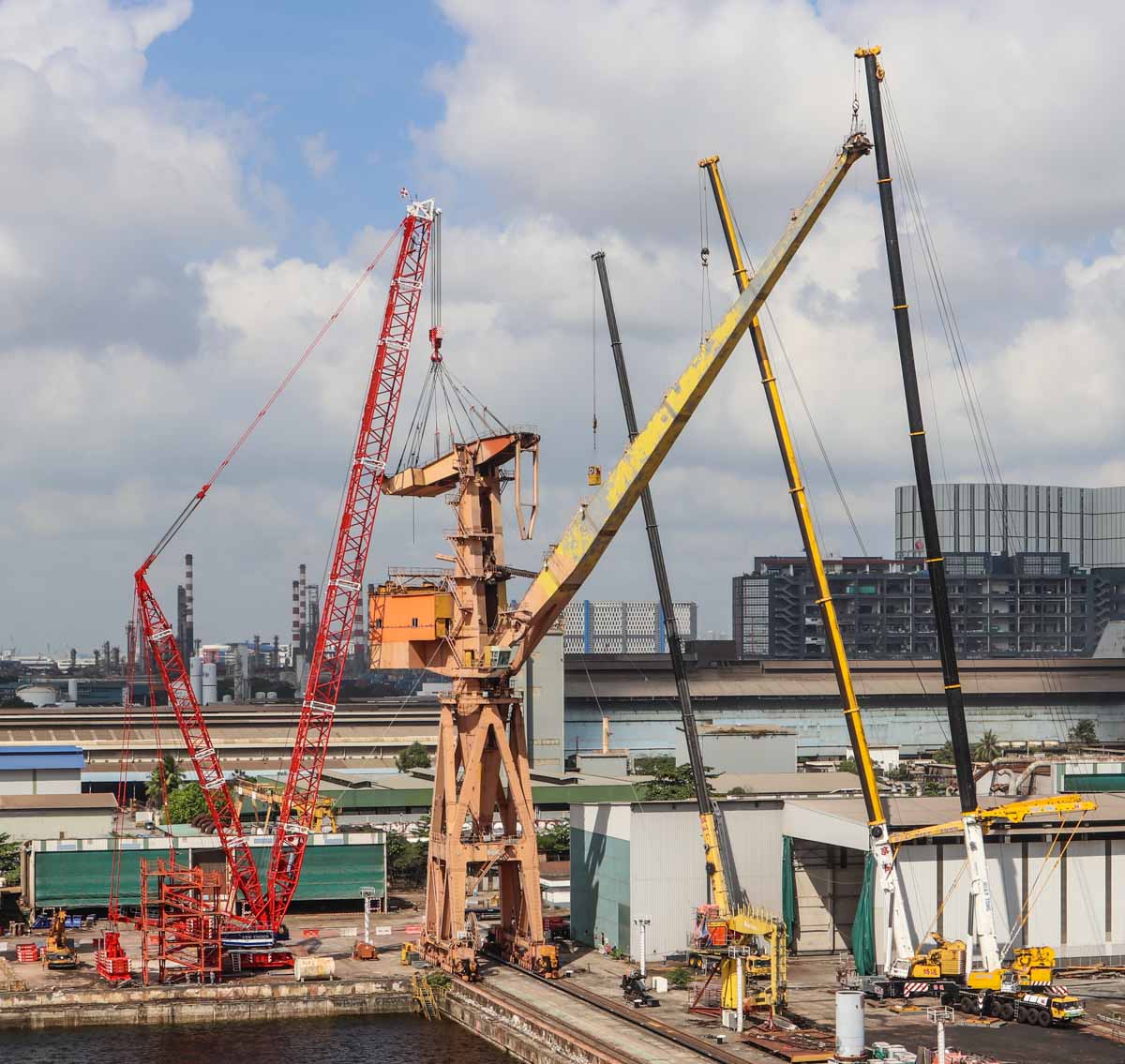
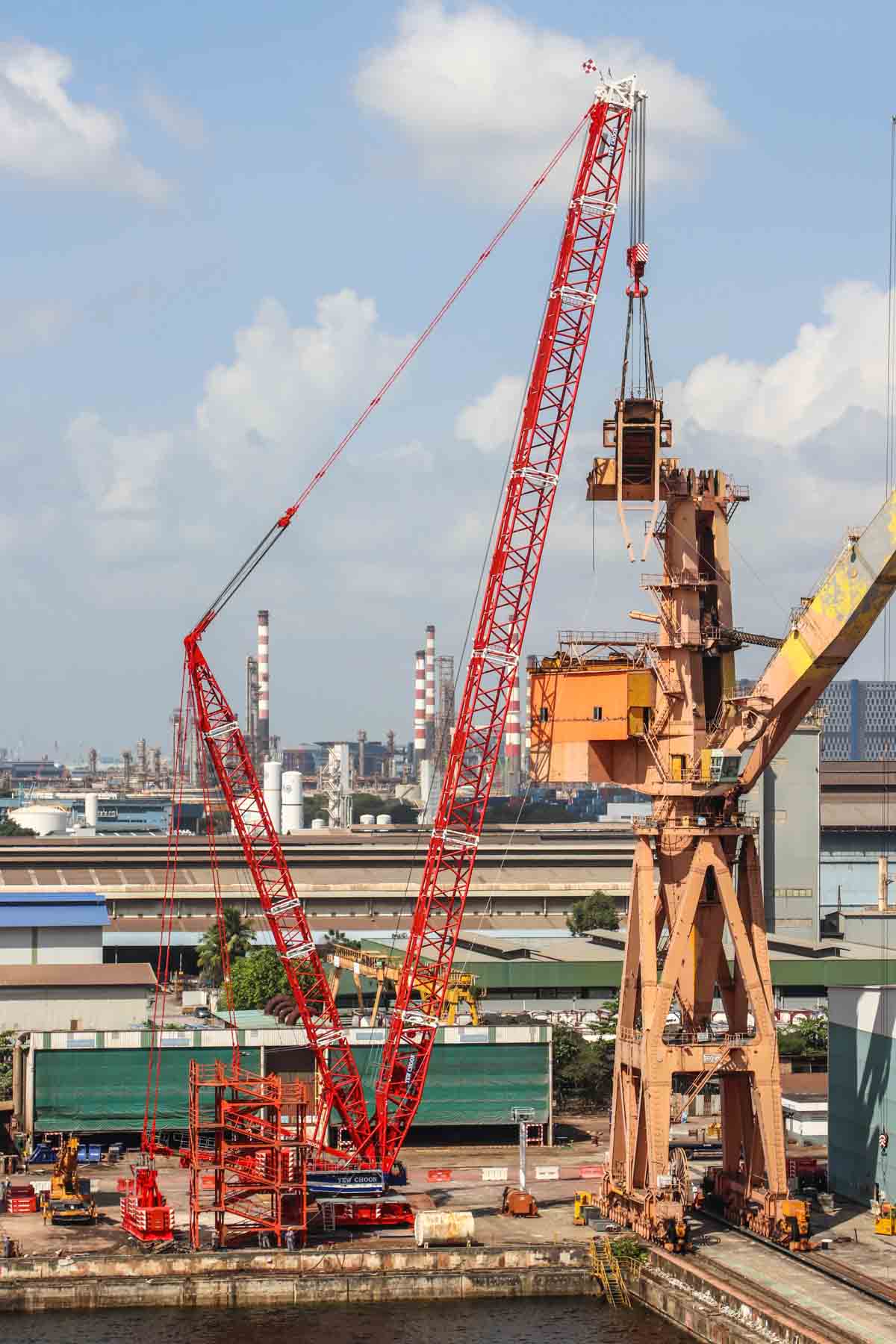
The ballast was removed at a radius of 21.5 metres. The crawler crane now slowly slews away from the yard crane in order to lower the ballast slowly and carefully.
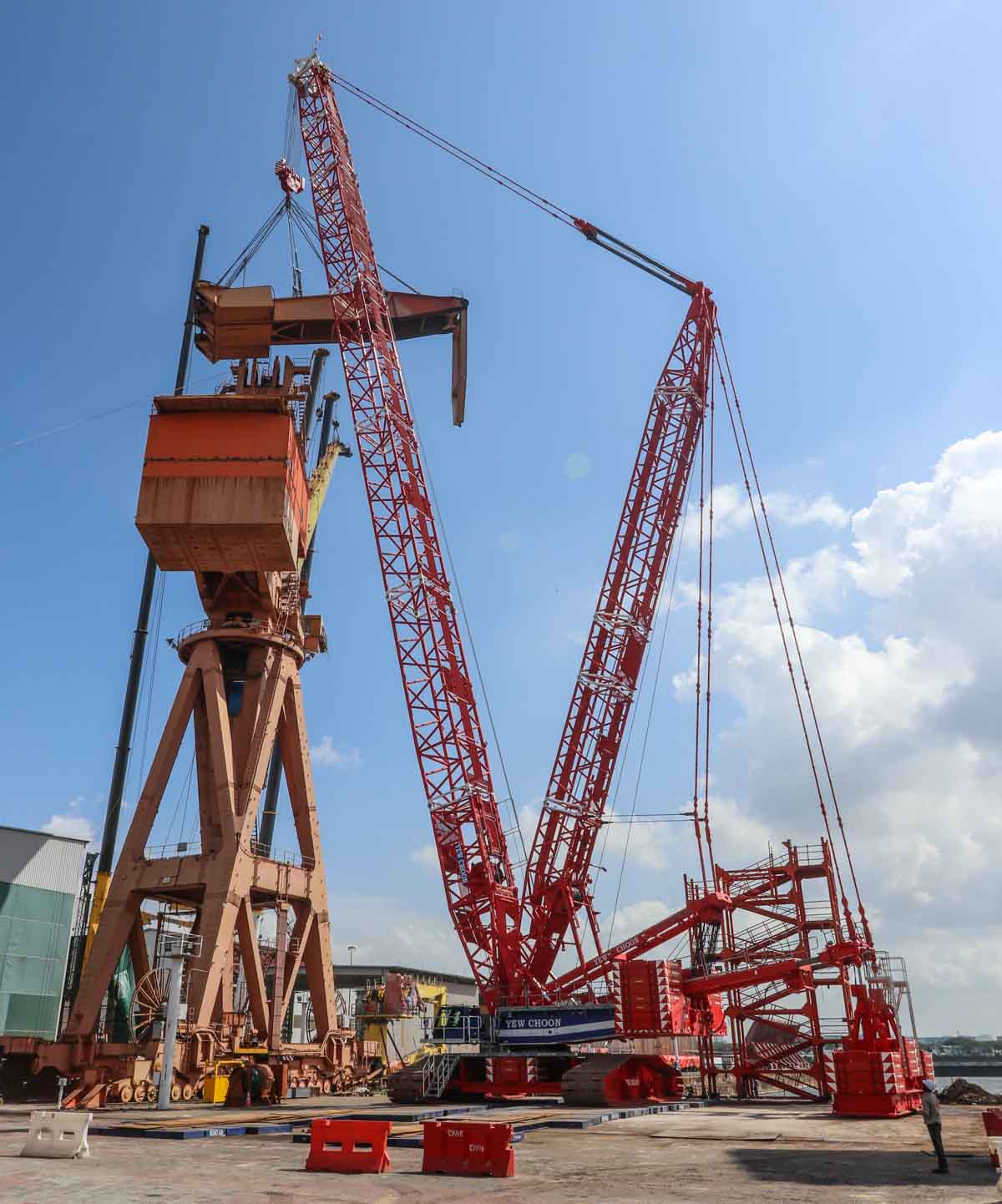
The superlift ballast is 150 tonnes, at approximately 18 metres counter radius.
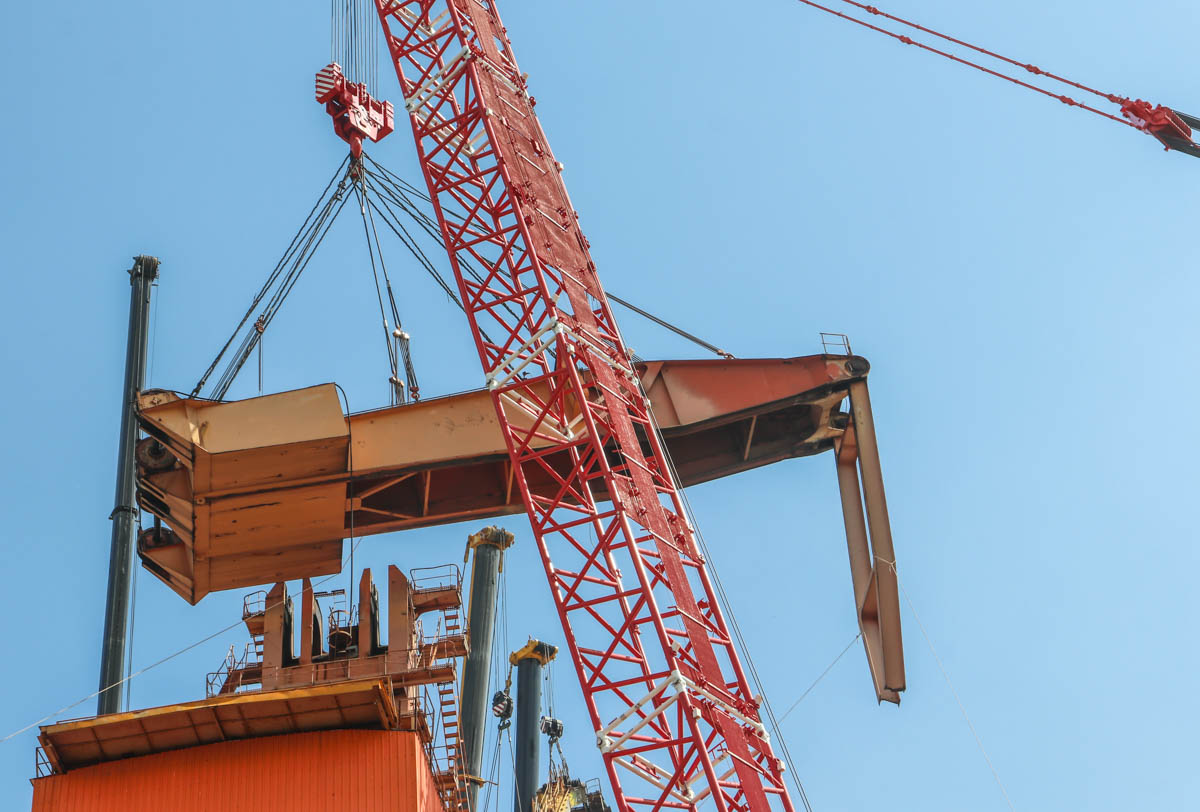
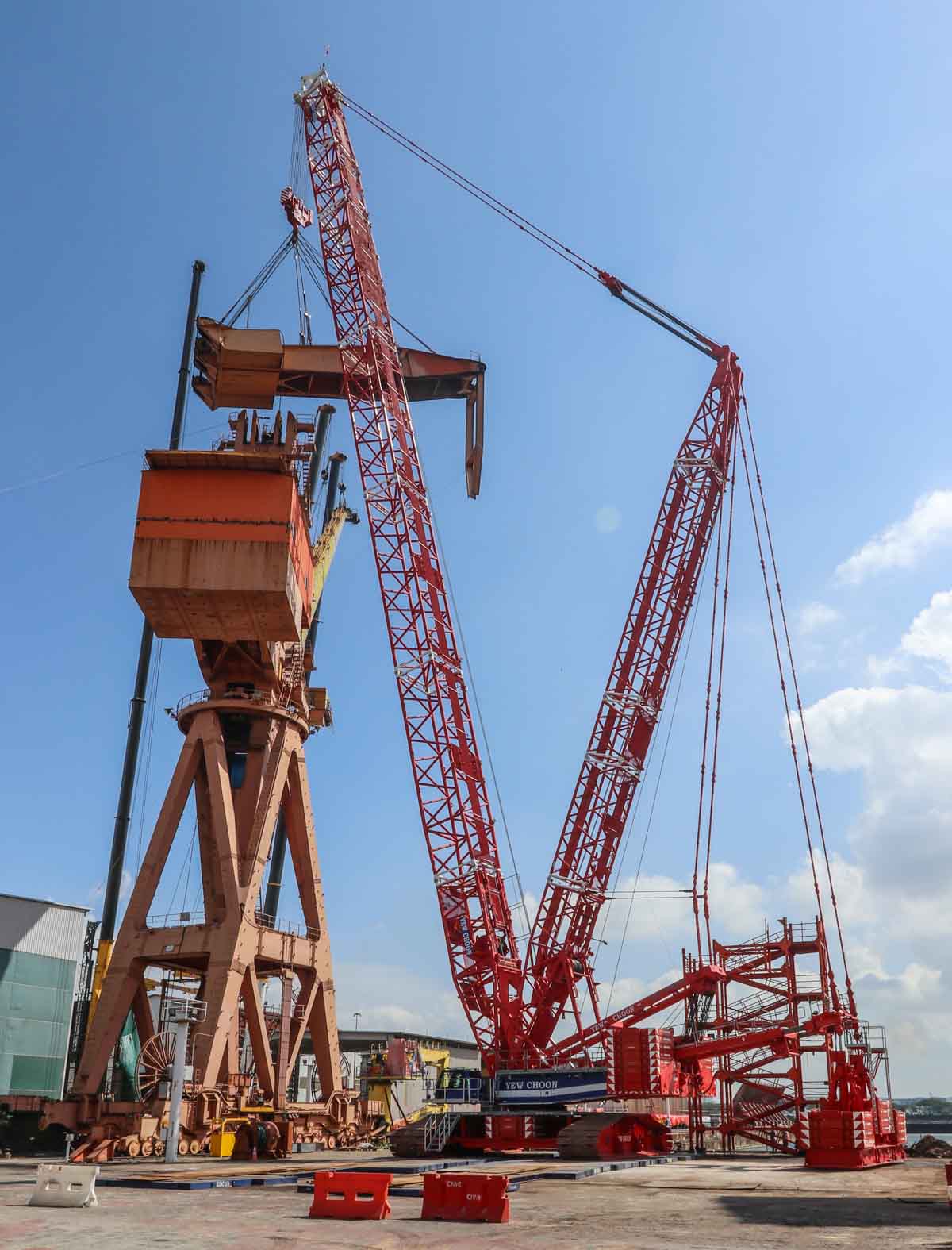
The space is only limited!
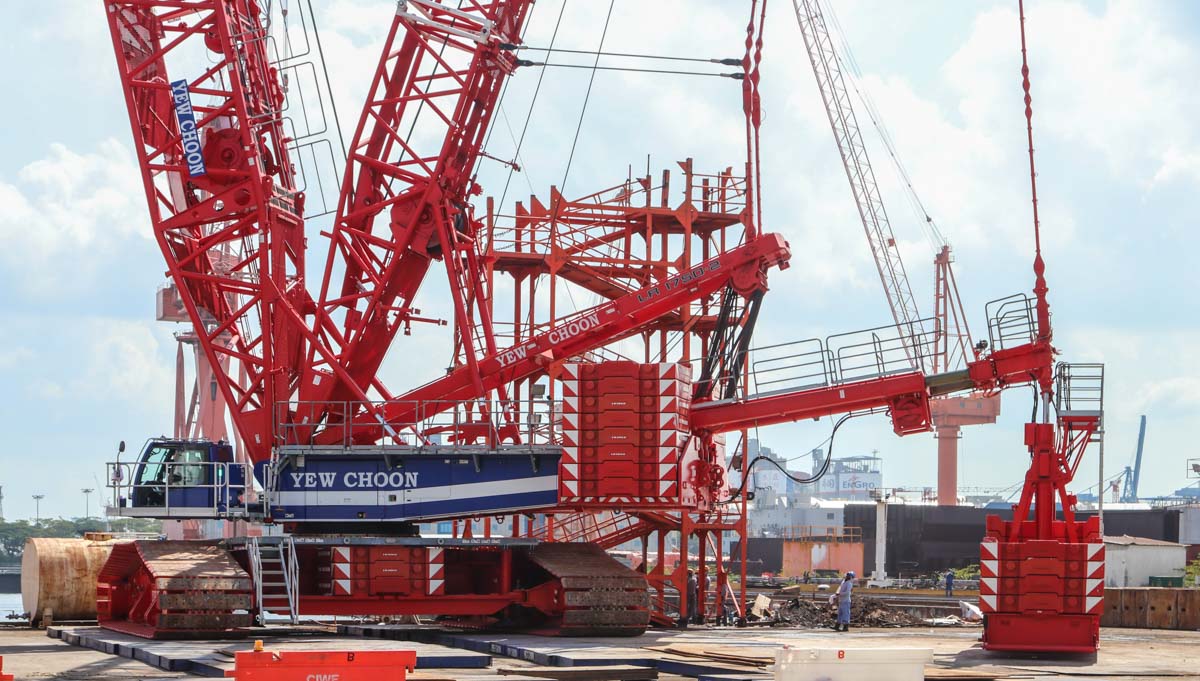
The LR 1750/2 is from the year of manufacture 2021. Here, the crane is erected with 95 tonnes of central ballast and 220 tonnes of superstructure ballast.
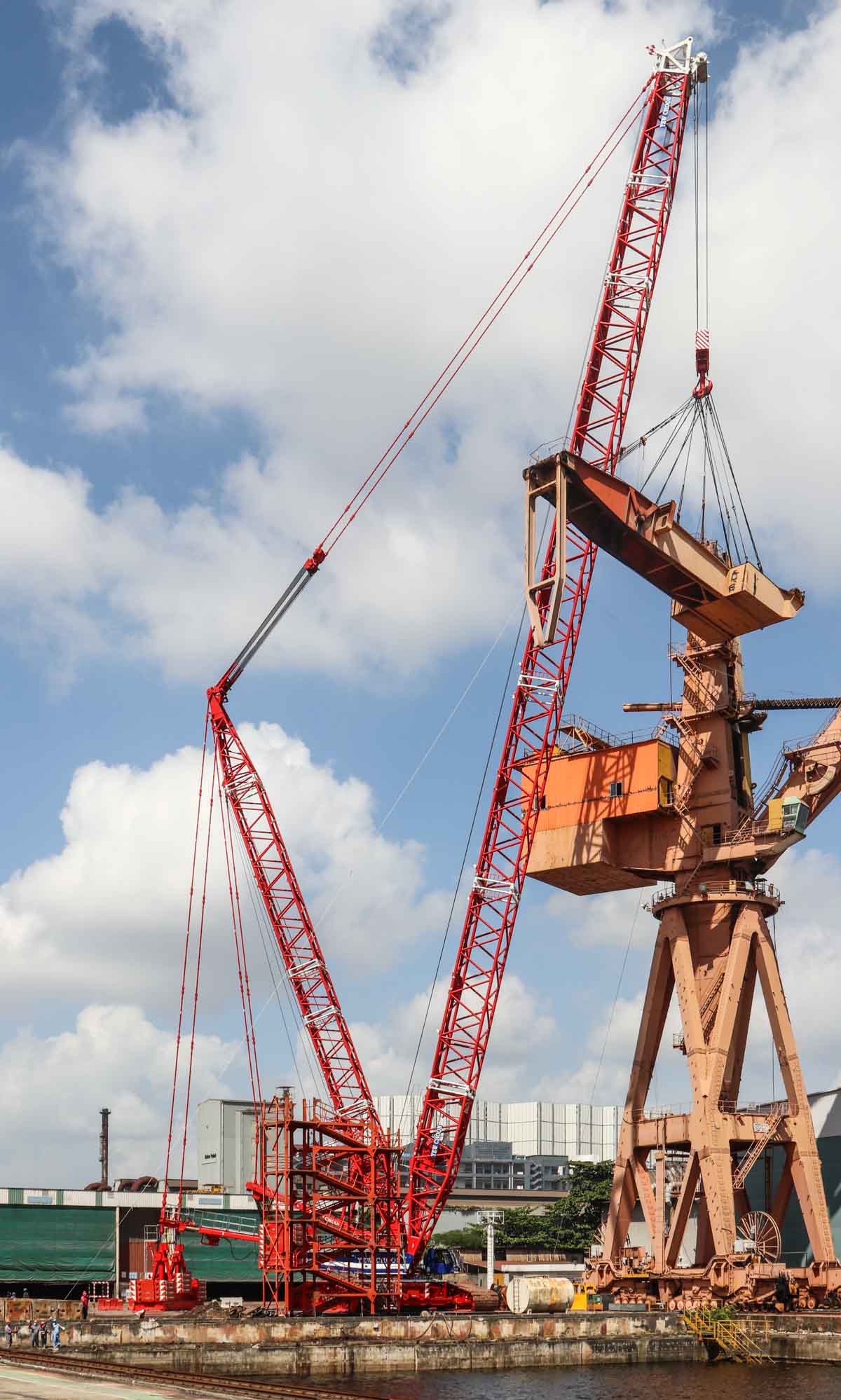
A crane is primarily built to lift heavy loads; lowering heavy loads must always be done very carefully and in a controlled manner. There is a risk that the hoist rope cuts into the underlying layers if it is not wound tightly on the drum. Yew Choon is highly experienced in this type of work and knows how to lower the load professionally.
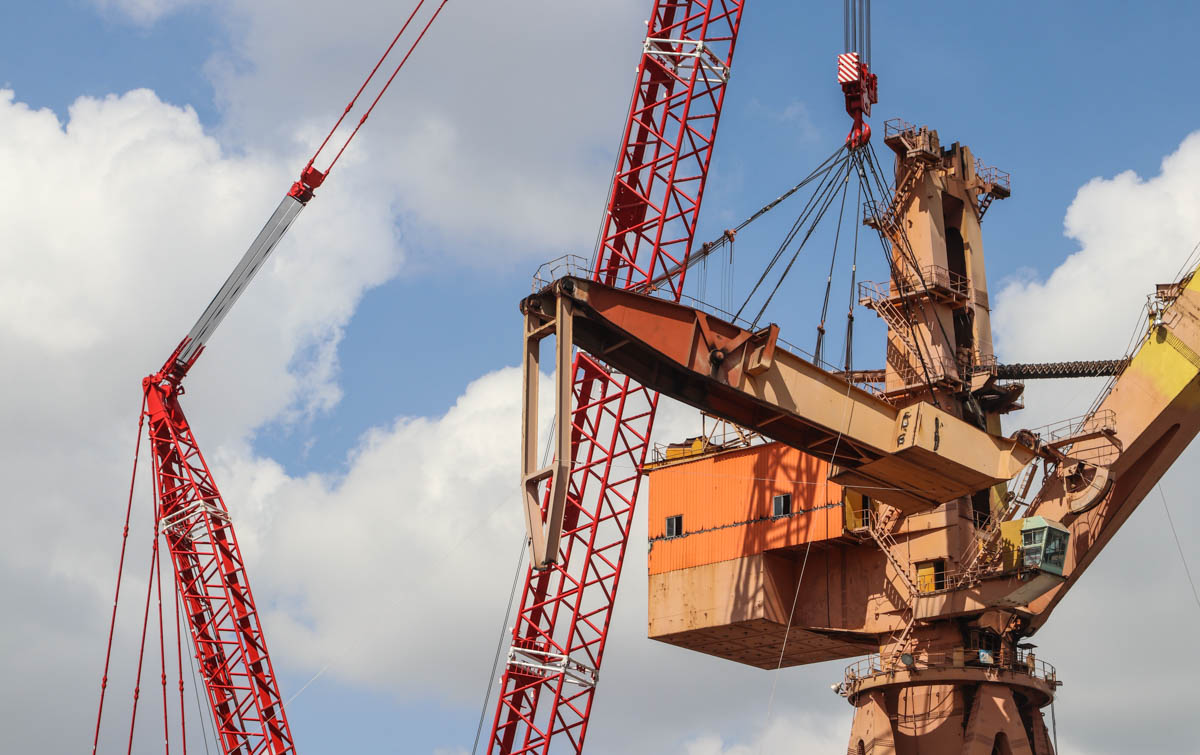
The destination of the yard crane is obvious; it will be scrapped completely!

The ballast has now almost reached the ground. Lowering the ballast took almost 2 hours!
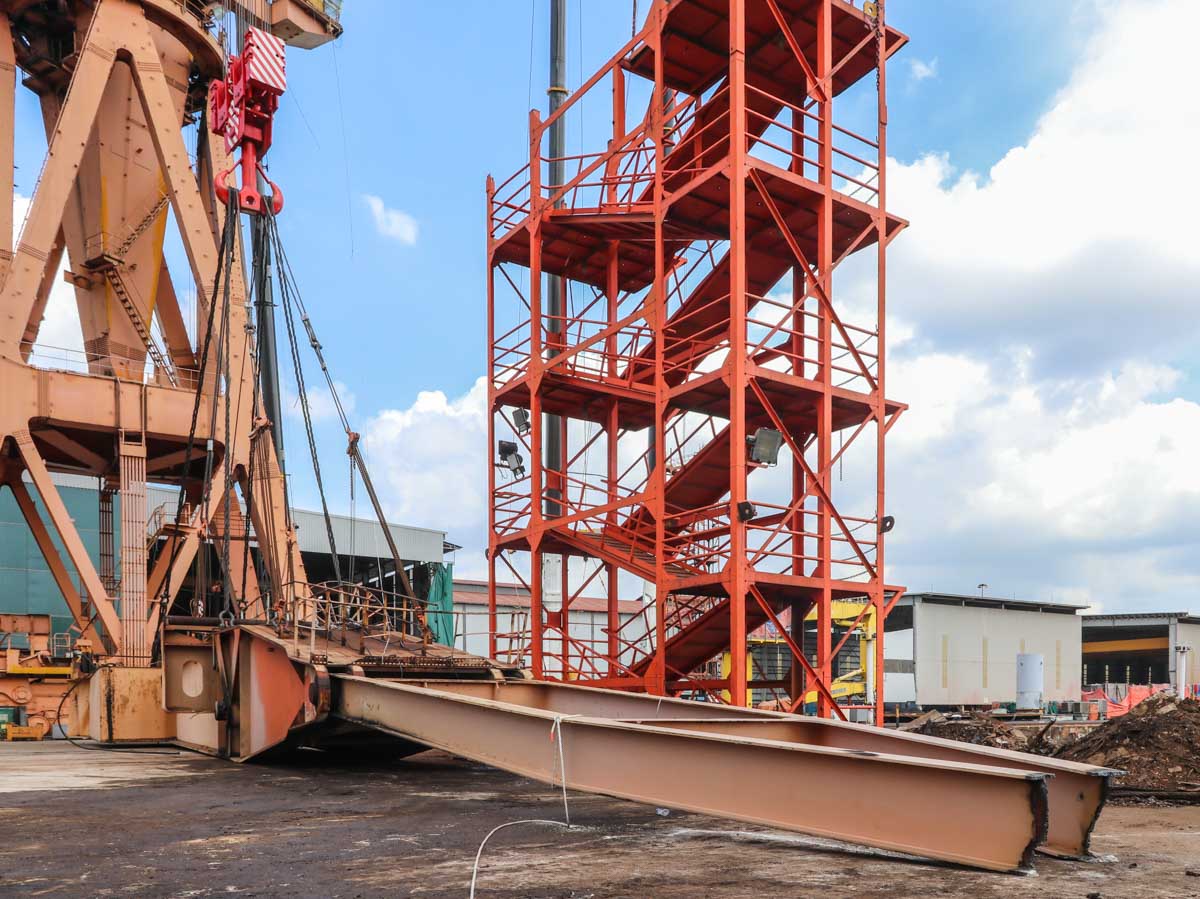
The load has reached the ground safely. Only on the ground does the size of the enormous ballast become clearly visible. The main boom was later also brought down to the ground with the aid of the mobile cranes; this ultimately weighed 55 tonnes. Unfortunately, I could no longer witness this. A very impressive and specialist lifting job carried out by the professionals of Yew Choon, Hiap Tong and Beng Soon!