Lifting of a houseboat by Schot and Sarens

In Amsterdam (NL), a new houseboat had to be launched into the water. The large concrete basement that had been constructed on land was estimated to weigh approximately 175 tonnes. In order to lift the basement into the water, Schot from Alkmaar (NL) was commissioned.
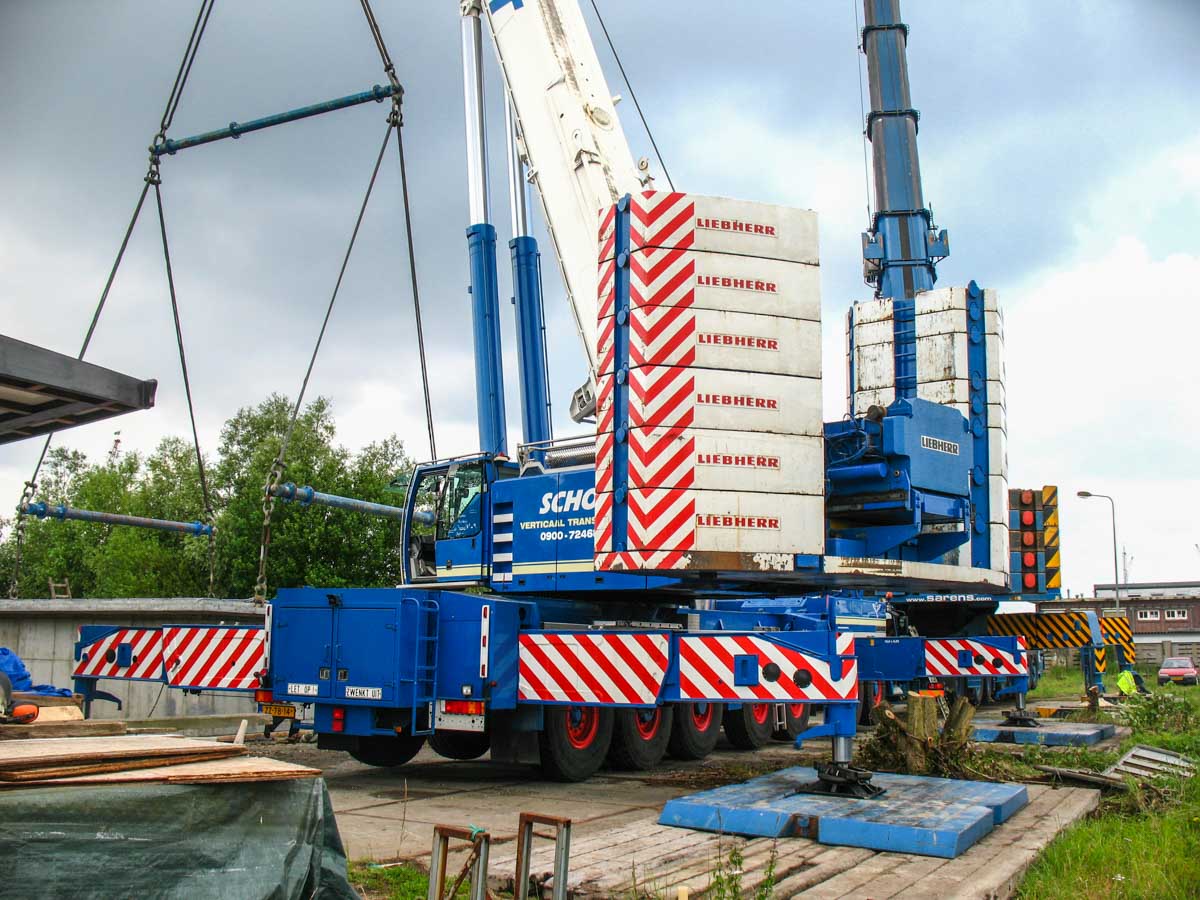
Schot deployed its (at the time) largest crane; the Liebherr LTM 1400-7.1. Shown here set up with the maximum ballast of 140 tonnes.
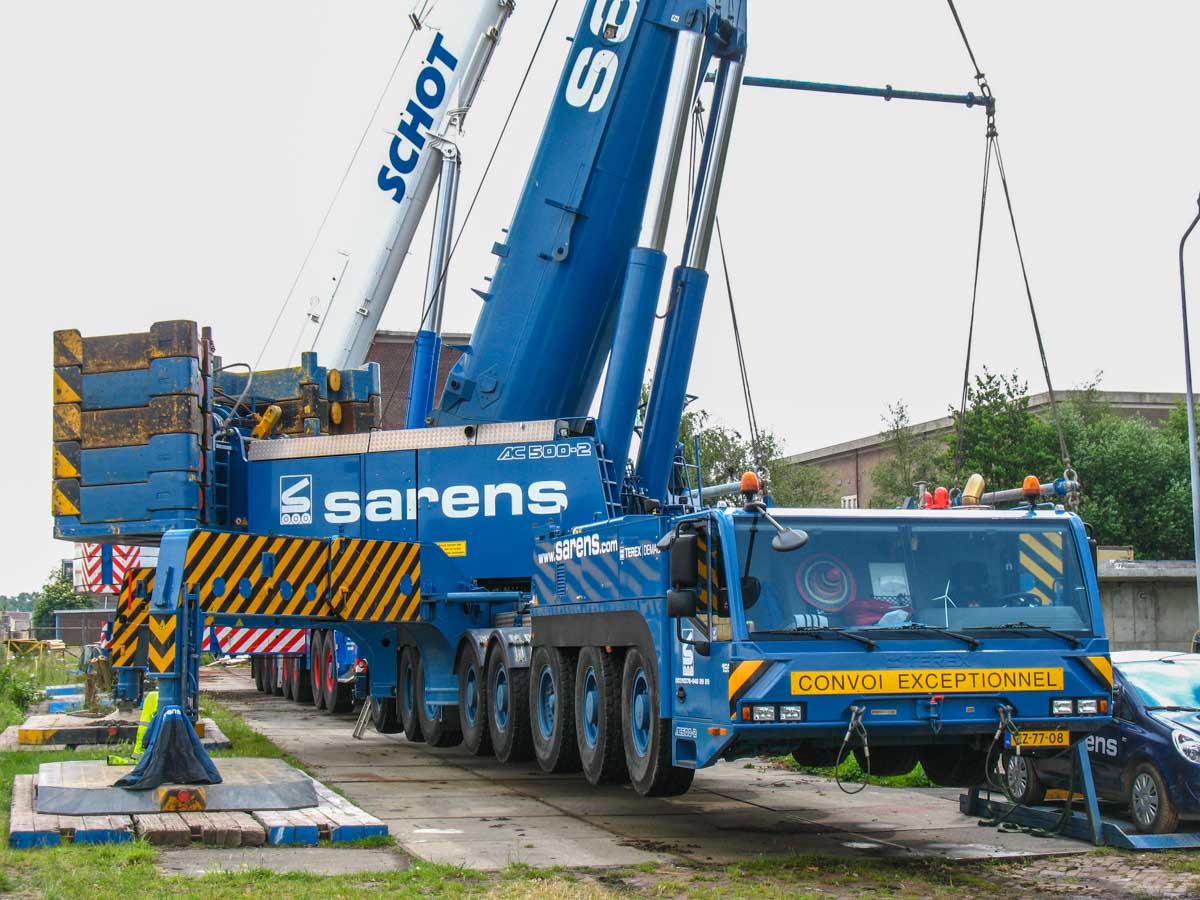
A Terex AC 500-2 was hired from Sarens; this crane was configured with a ballast of 120 tonnes.

Each crane would lift half of the total weight of the structure. By means of an equalising beam arrangement, each crane lifts the basement at four points.
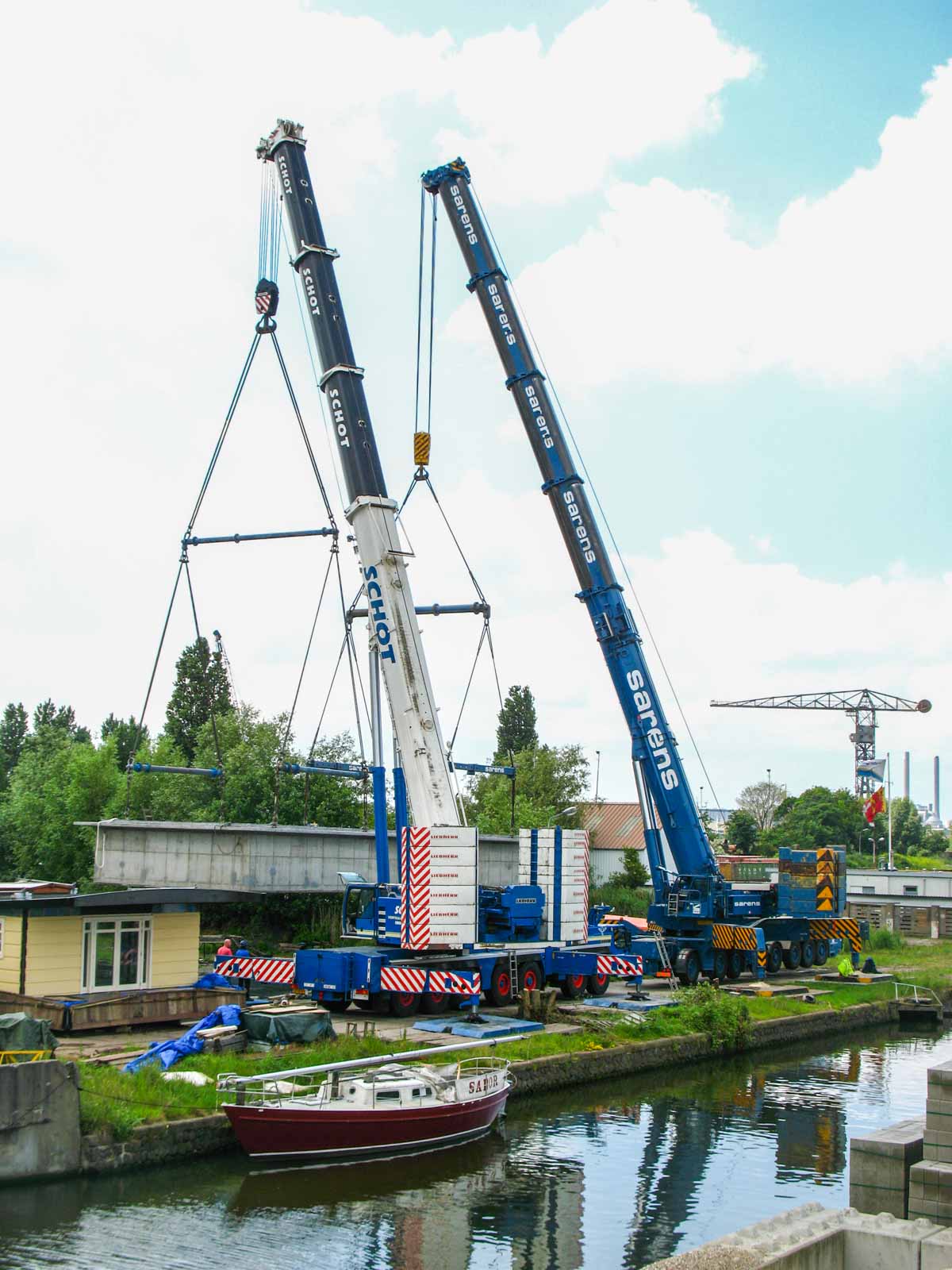
The main boom of the LTM 1400-7.1 is 30.8 metres long here, while that of the AC 500-2 is extended to a length of 33.2 metres.

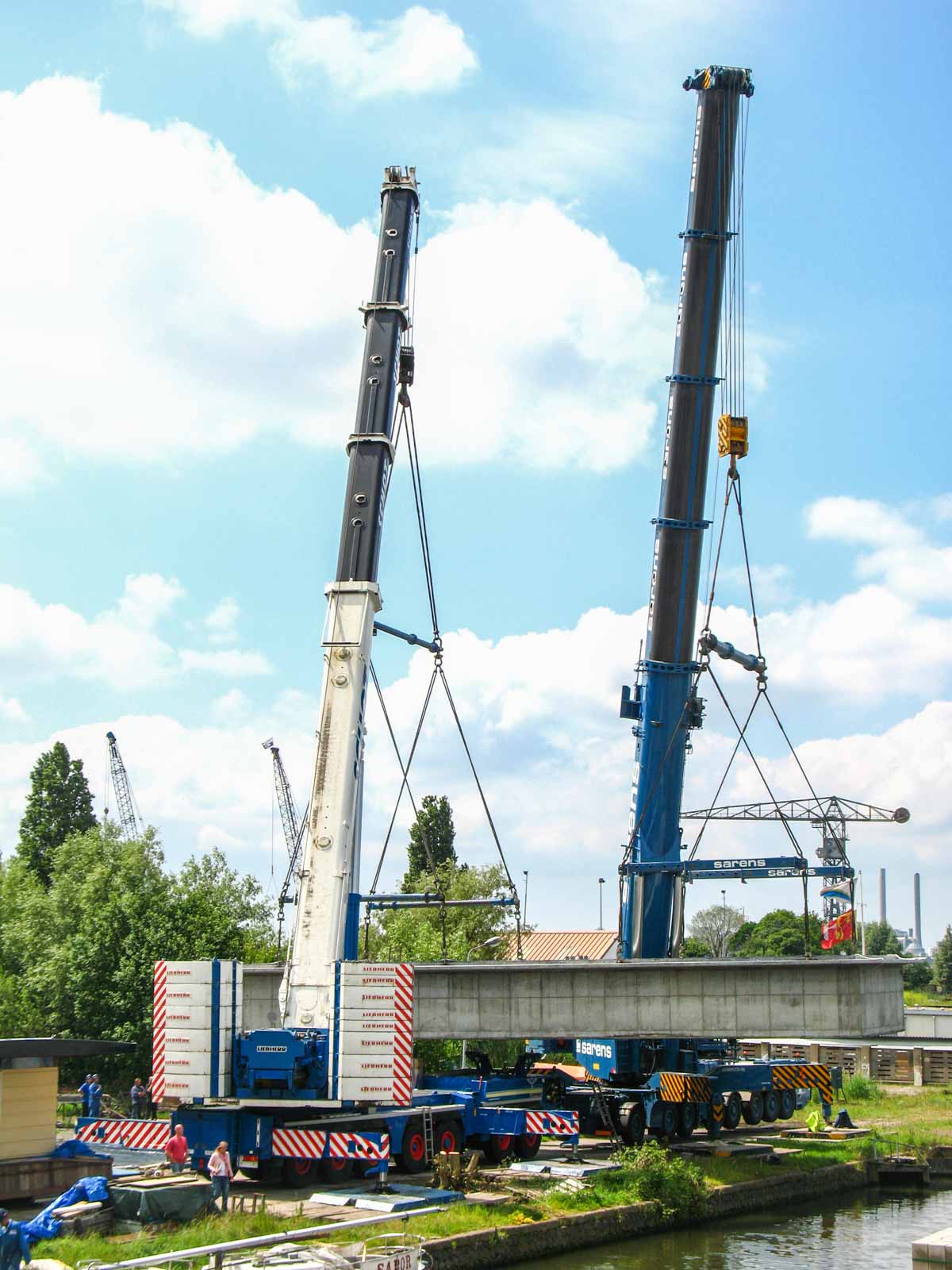
The basement, which ultimately proved to weigh 165 tonnes, is slewed between the cranes.
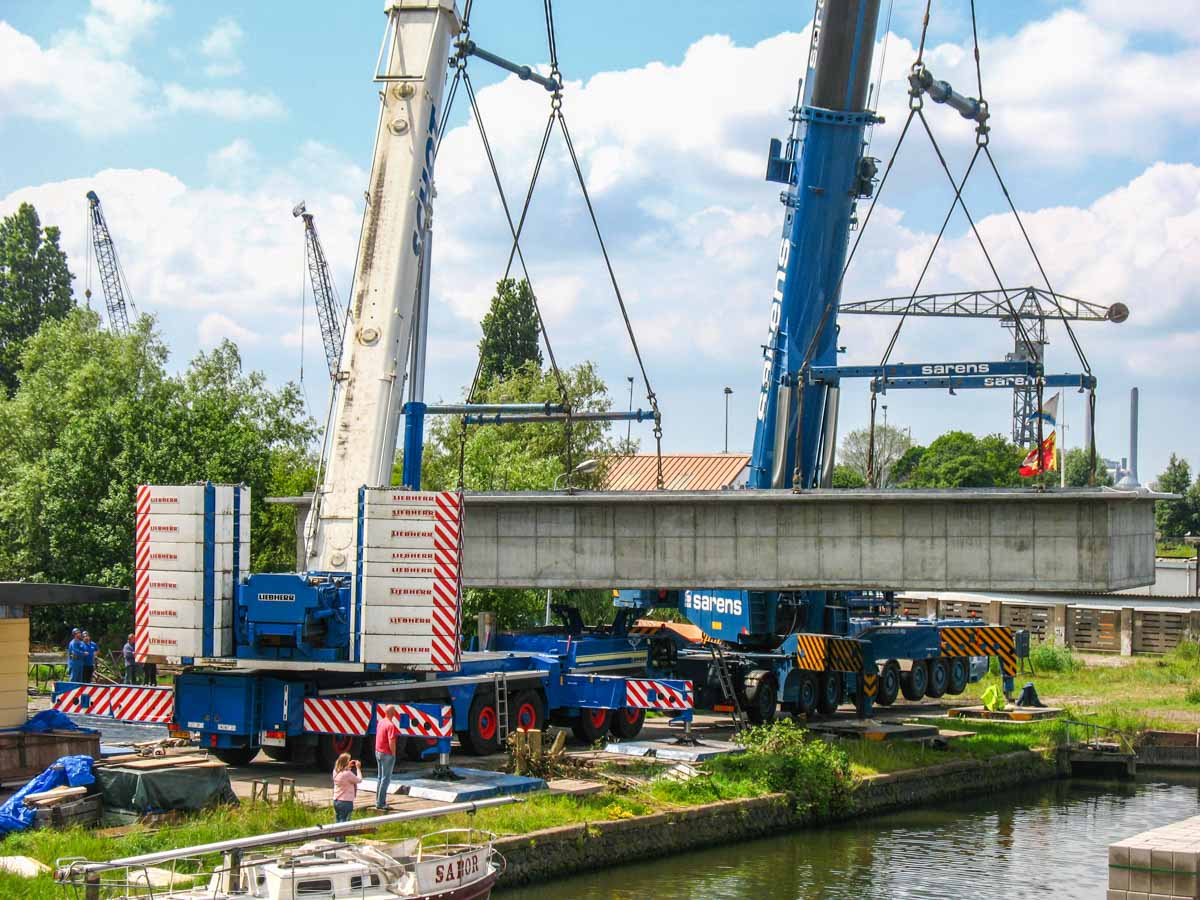
In the background, the old yard crane of the NDSM shipyard is visible; this crane was dismantled a few years later by Saan.

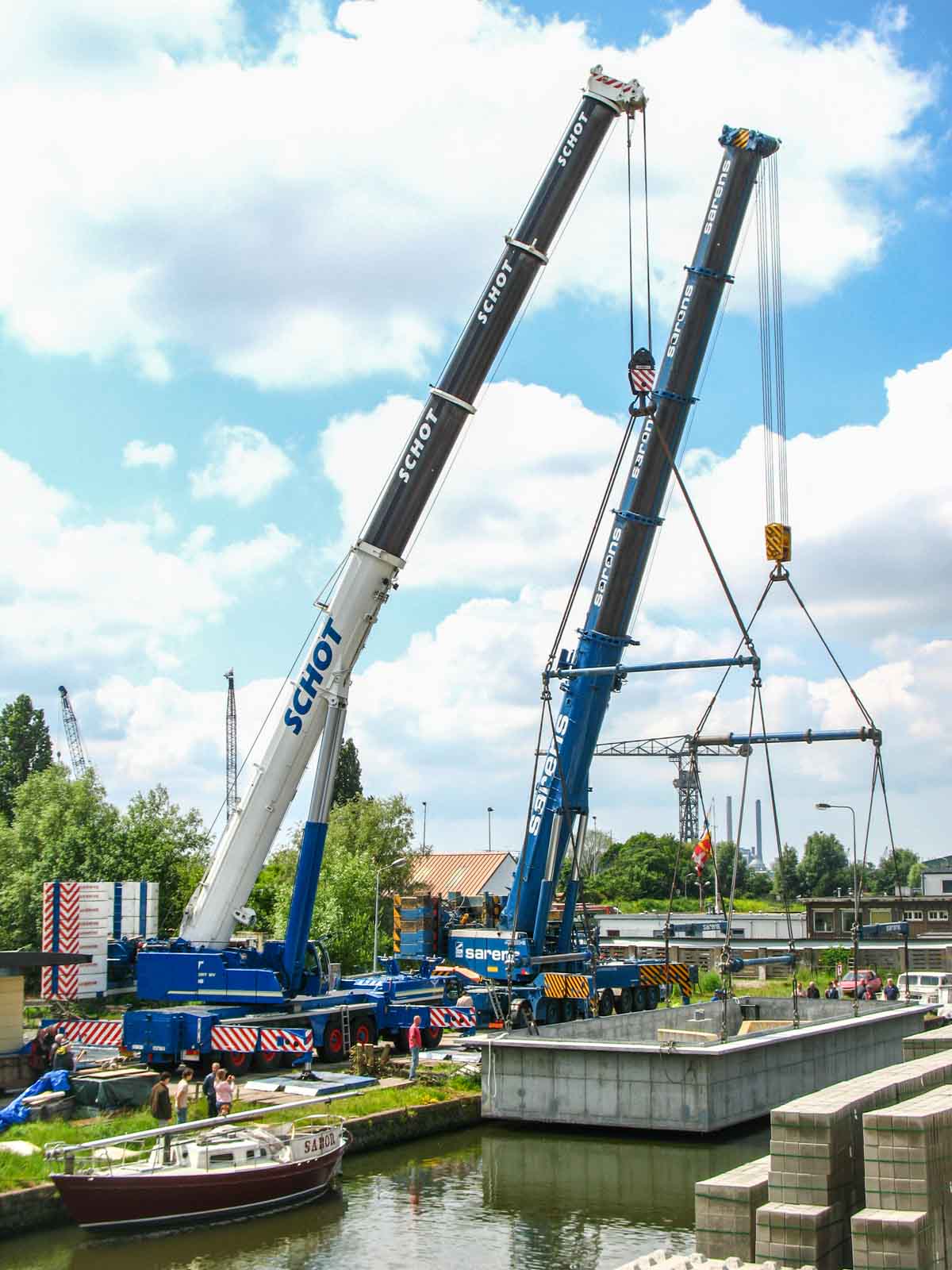
The basement will soon touch the water.
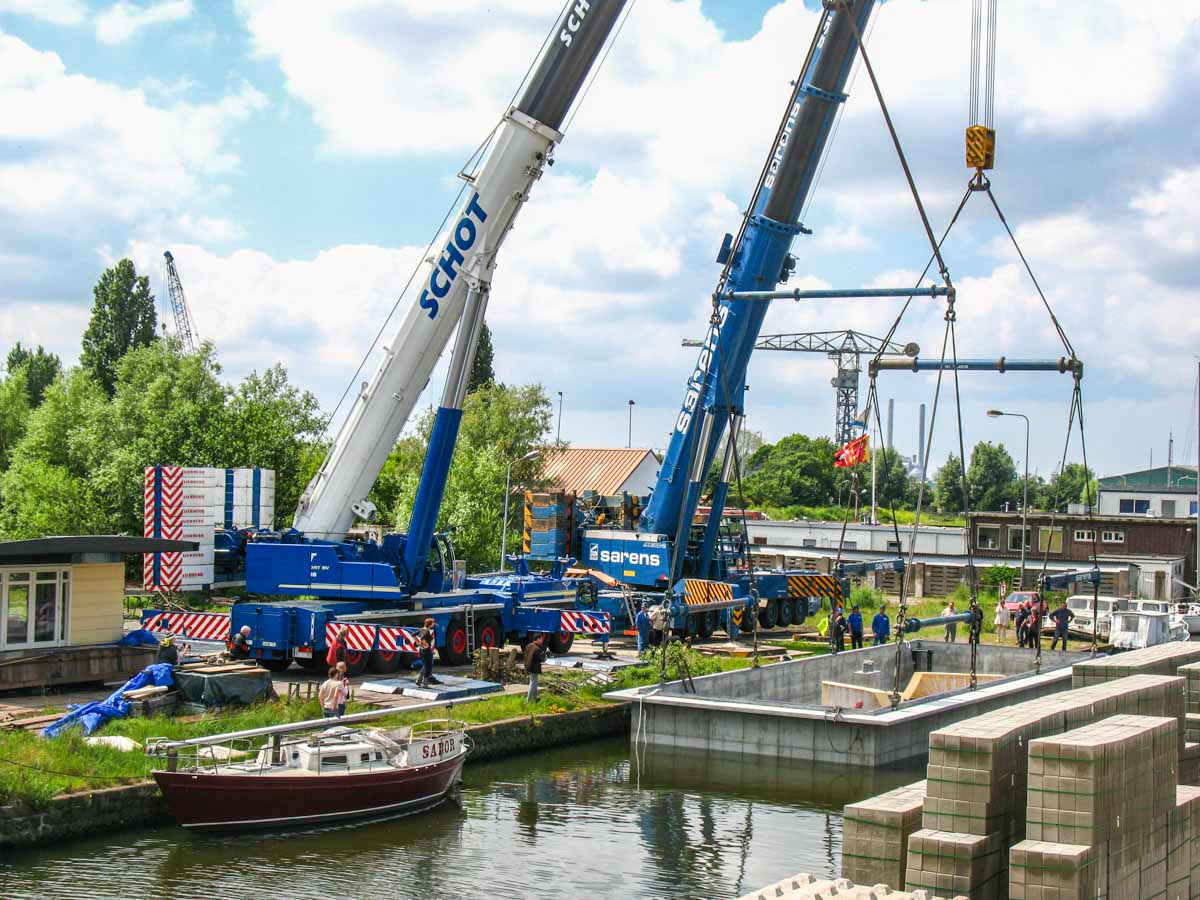
Always a tense moment for everyone involved in the construction - will the basement remain afloat?
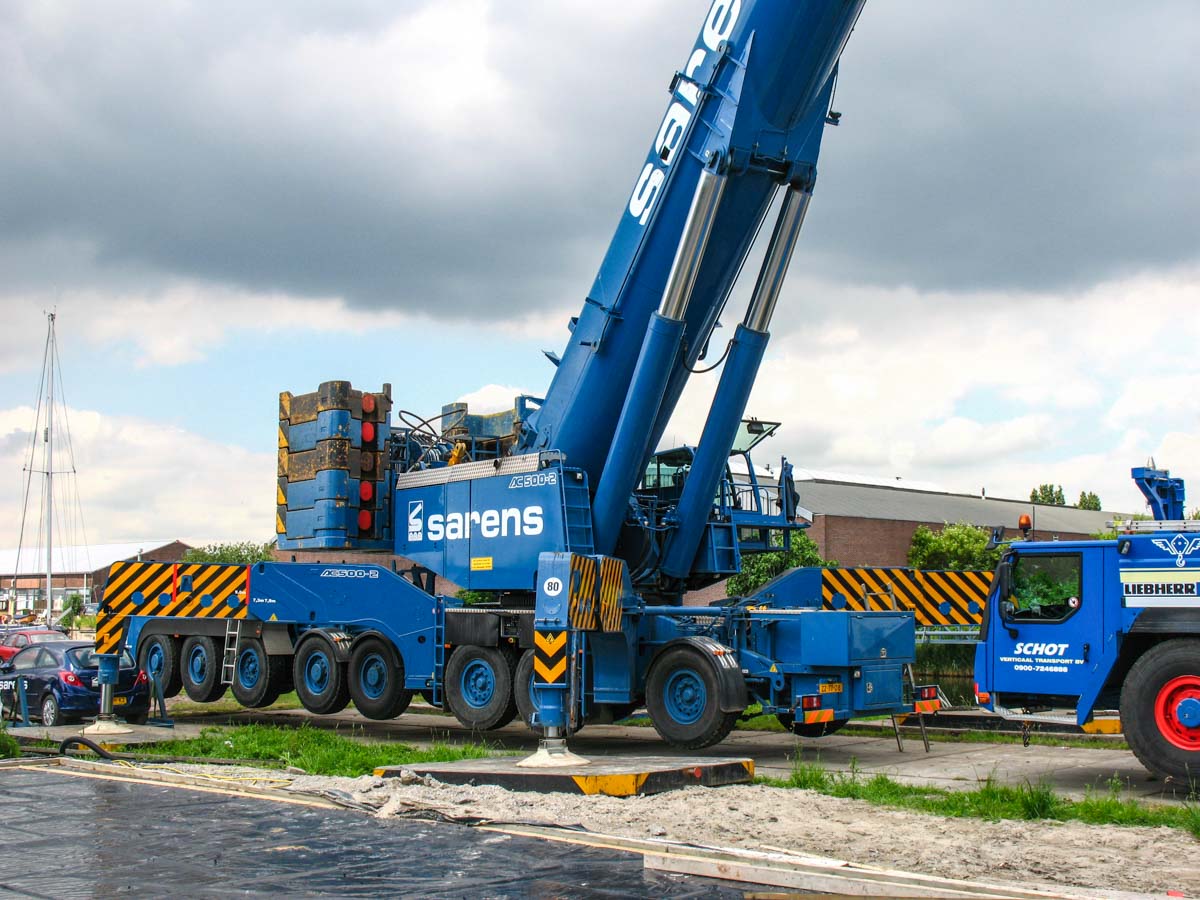
The outrigger base of the Terex AC 500-2 measures 9.62 x 9.6 metres.
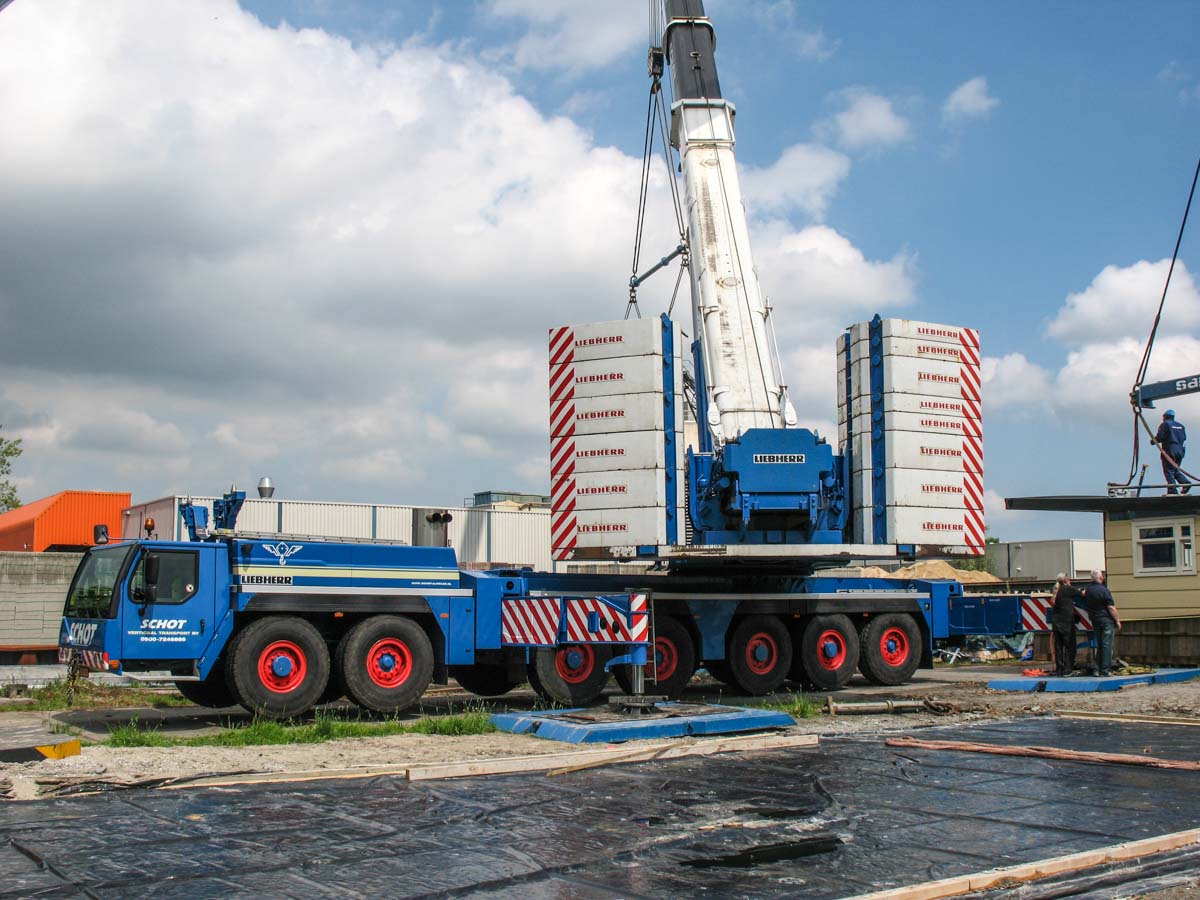
The Liebherr LTM 1400-7.1 has an outrigger base of 10 x 9.51 metres.
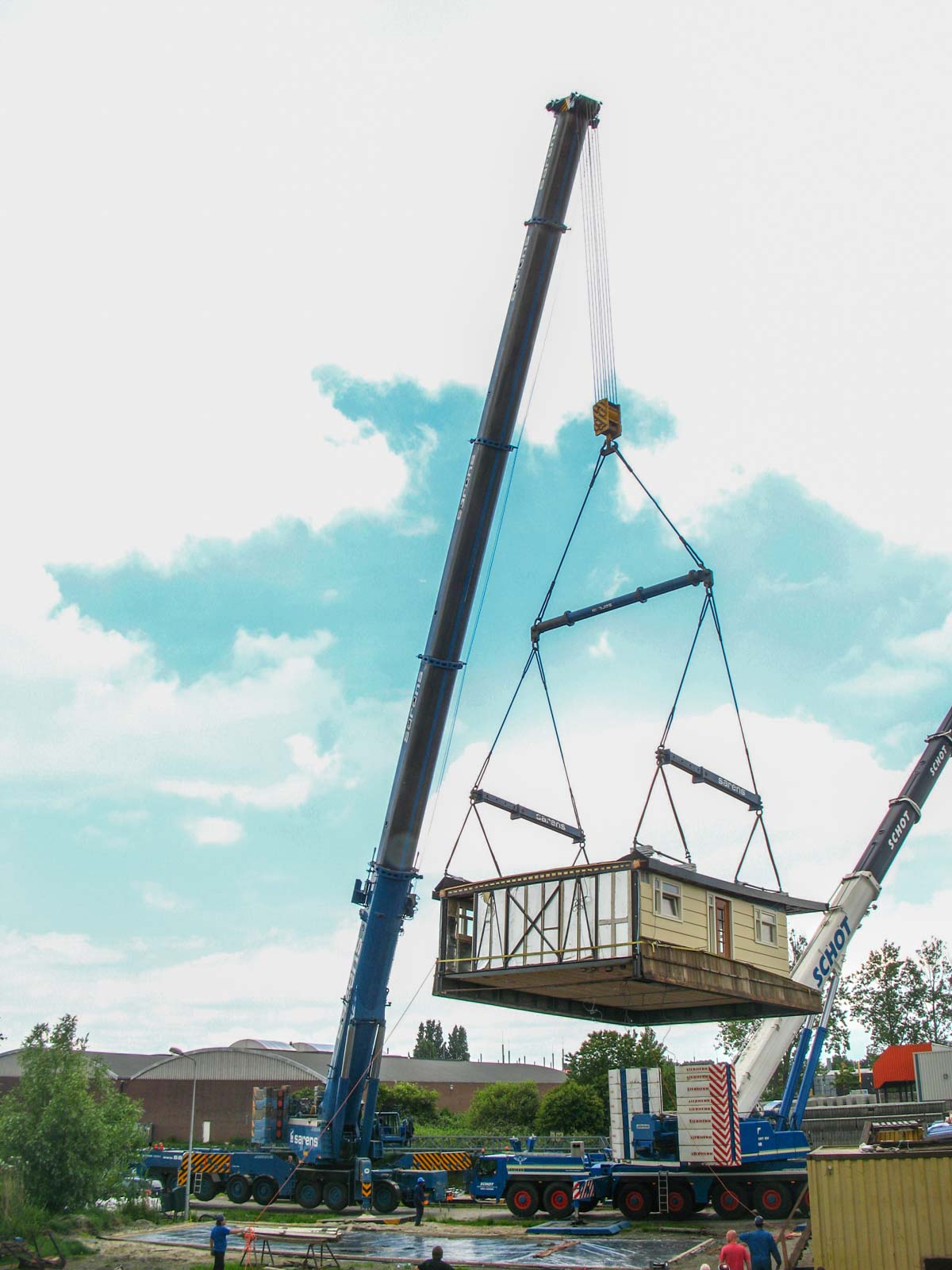
The basement has remained dry. Immediately afterwards, the house, which had also been prefabricated on shore, will be mounted onto the basement.
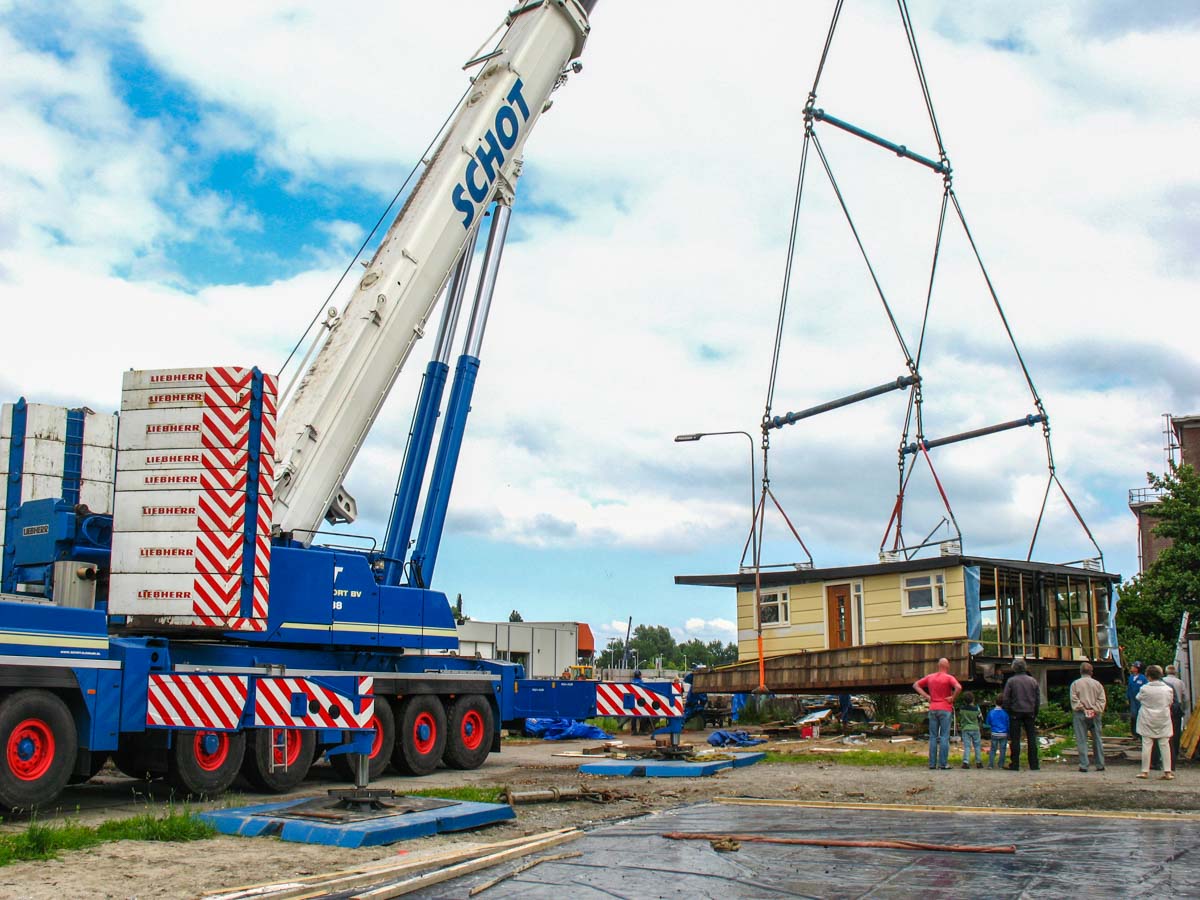
These halves each weigh approximately 14 tonnes (excluding rigging).
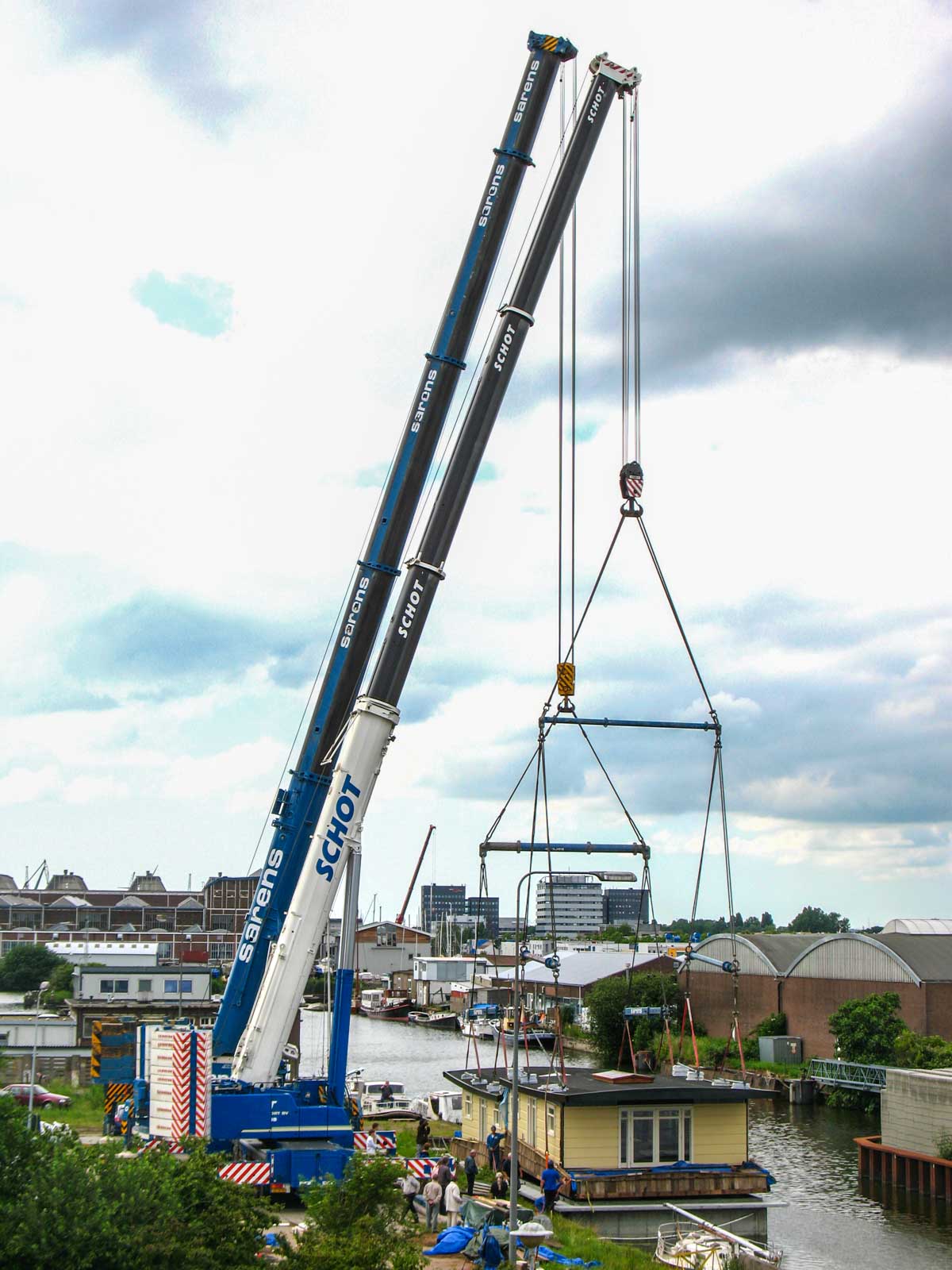
The LTM 1400-7.1 has now extended the boom to a length of 41.1 metres.
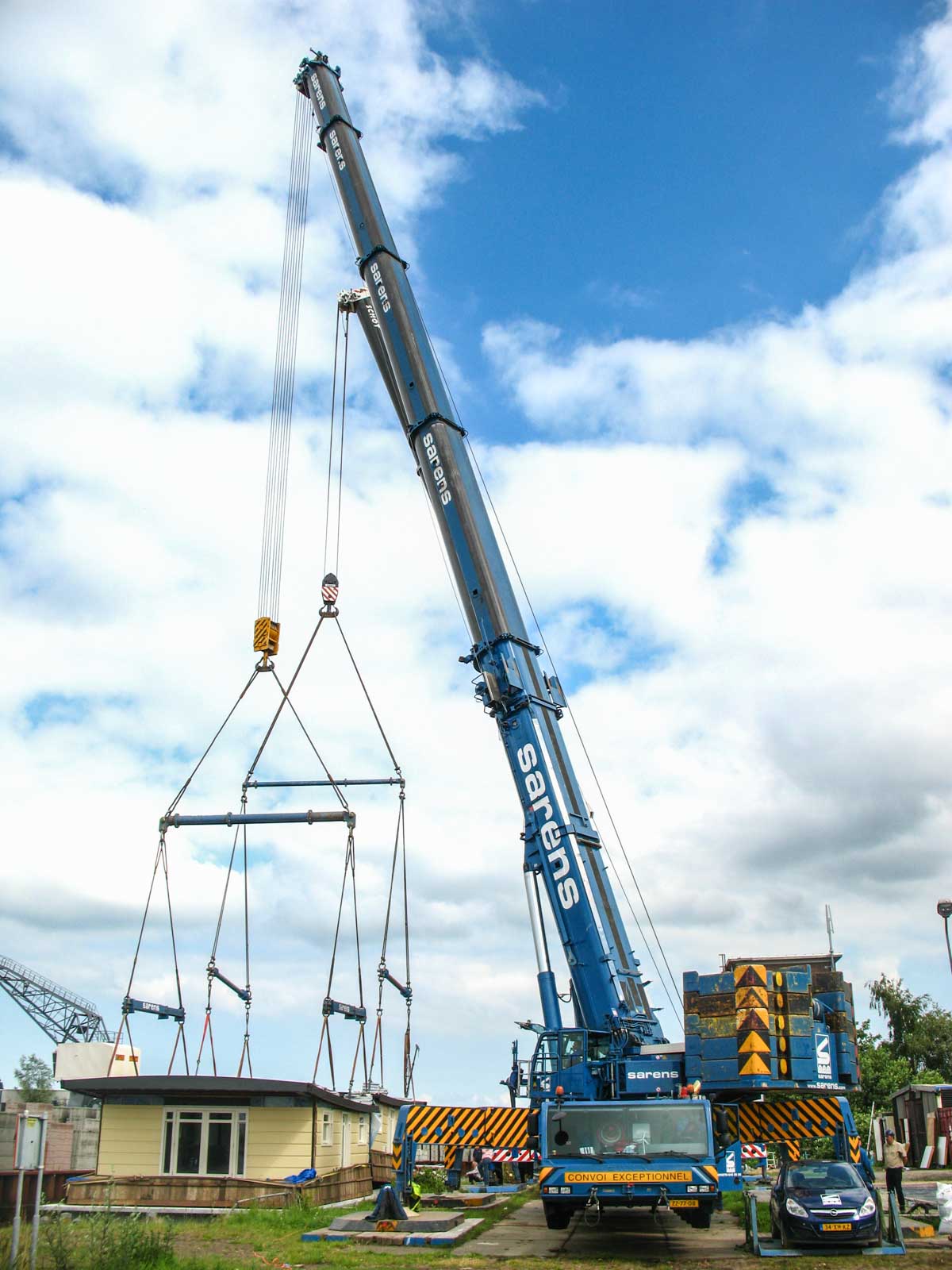
The boom of the AC 500-2 is 47.2 metres long here.

The three largest sections of the houseboat have now been assembled together. Final outfitting will follow from the water.
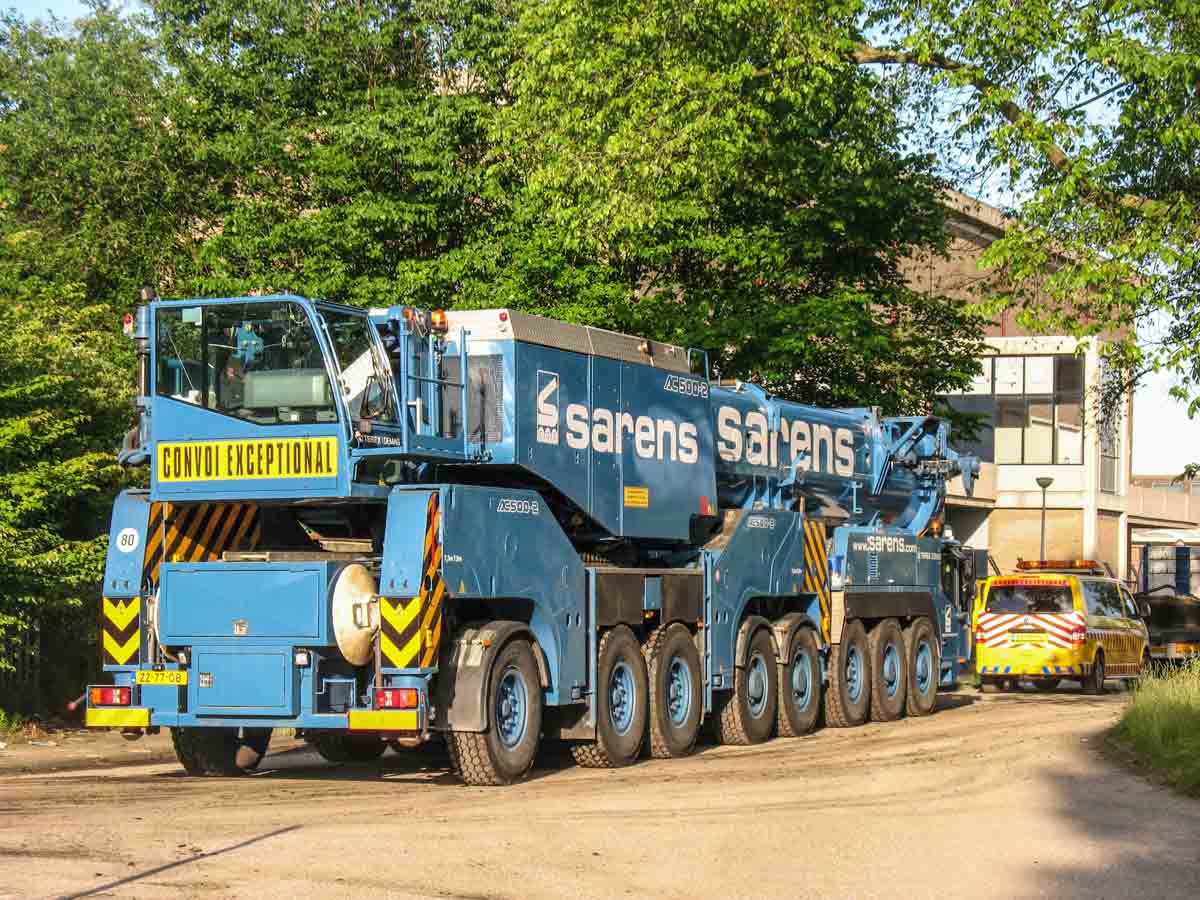
A little under three hours later, the AC 500-2 can leave the site, heading for the next job!
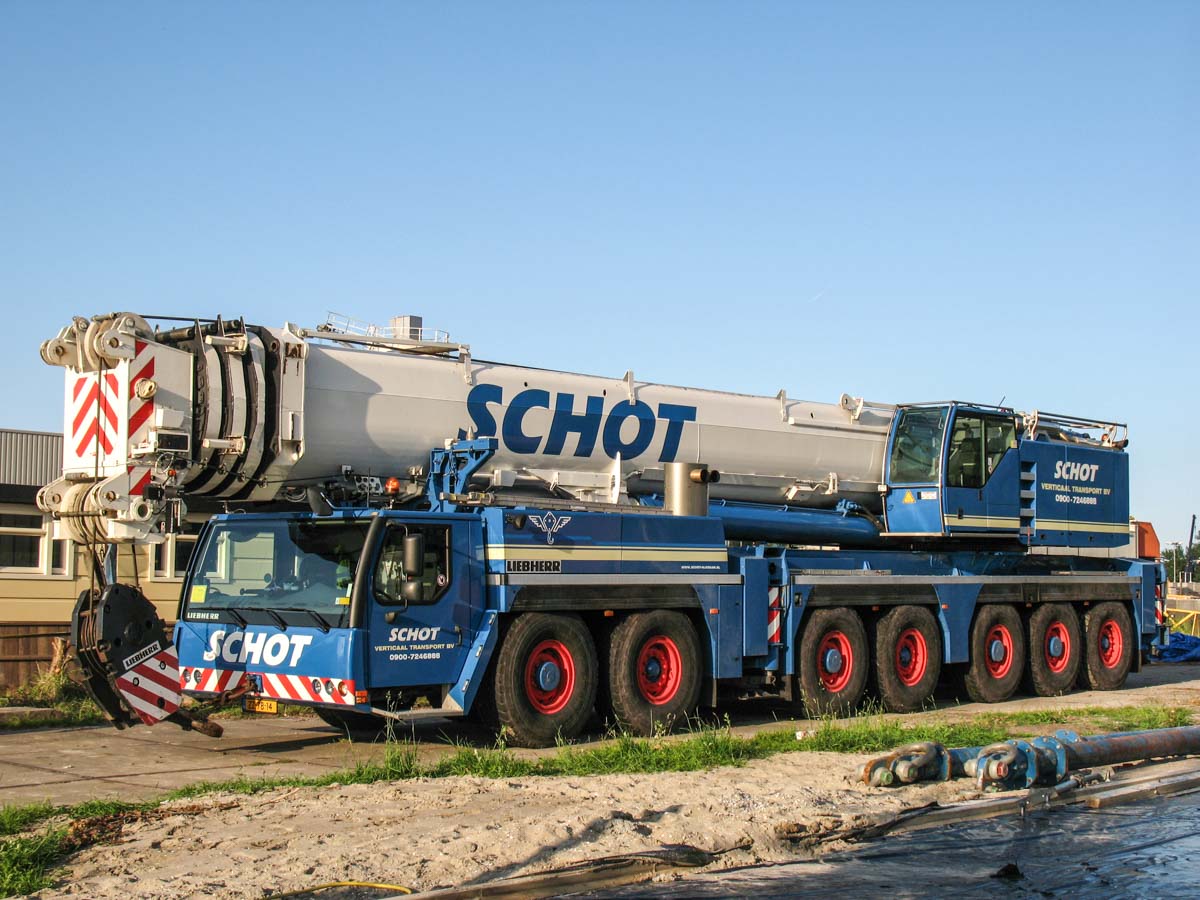
Quickly followed by Schot's LTM 1400-7.1. An exceptionally fine lifting operation!